Build a personal slip-box to turn notes into new ideas
The slip-box, inspired by a pioneering 20th-century sociologist, is nothing more than a box of index cards numbered and linked to one another. Each card holds a single idea, sentence, or thought, written clearly and connected with handwritten pointers to related cards.
As you fill the box, cards accumulate into threads of thought—clusters of linked ideas that reveal patterns you never consciously assembled. Unlike filing by topic, these bottom-up links let you spot surprising connections—like an observation about habit-forming linking to research on willpower.
With a simple numbering system—say, 1, 2, 3, then 3a, 3b—you branch discussions without forcing them into rigid categories. Every new note nudges you toward old notes, sparking fresh angles. It’s like having a silent collaborator reminding you what you already know.
Digital tools now emulate this paper method, automating numbering and links. Whether analog or app-based, the magic lies in treating each thought as a standalone building block. Over time, the slip-box becomes a living network of ideas you can explore and expand.
First, write each idea on its own note and give it a unique number or tag. Next, look through your existing notes for related ideas and scribble their numbers on the new card. Do this weekly: skim through your box to spot threads of linked notes and flag clusters to explore in your next paper or article. Soon, you’ll have a dynamic map of your thinking—ready whenever you need fresh inspiration.
What You'll Achieve
You’ll offload mental clutter, shape a growing map of interlinked ideas, and turn note-taking into a creativity engine that feeds every project.
Start your own slip-box habit
Capture one idea per card
Whenever you think of a concept or read something noteworthy, write it on its own note. This prevents clutter and lets you recombine ideas freely.
Number or tag each note
Assign a simple sequential number or a short tag to every note. With digital tools you can automate this; on paper, write numbers by hand.
Link related notes directly
When adding a new note, look for 2–3 existing notes it touches and note their IDs on the new card so you can trace the chain of thought later.
Review connections weekly
Once a week, browse your slip-box for emerging clusters of linked notes. Identify threads you might want to explore in a paper or project.
Reflection Questions
- Have you ever tried writing one thought per note instead of lumping many together?
- Which topics in your box already form small clusters?
- What surprising connection did you find this week?
- How might you turn a cluster into a draft outline?
Personalization Tips
- A graphic designer notes each color theory principle on its own card, then links them to past branding examples.
- A parent jots observations of each child’s reaction to routines, tagging and connecting them to spot patterns.
- A musician writes riff ideas separately, numbers them, and links riffs that share a chord progression.
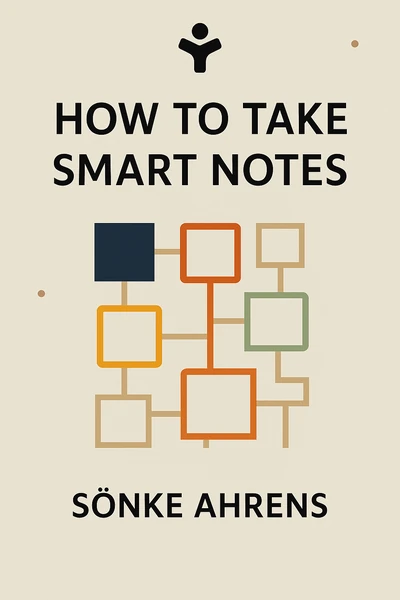
How to Take Smart Notes: One Simple Technique to Boost Writing, Learning and Thinking
Ready to Take Action?
Get the Mentorist app and turn insights like these into daily habits.