Why a stranger's handshake tells a recruiter more than the interview does
Renata had interviewed enough people to know that the resume rarely told her what she needed to know. What told her more was the first sixty seconds: the handshake, the way a candidate answered "how was the drive over," whether their laugh came easily or on cue. She wasn't reading any of it for meaning yet. She was building what professionals in this field call a baseline, the ordinary, everyday version of a person's behavior against which anything unusual can later be measured.
This matters because there is no universal signal for lying, no Pinocchio's nose that appears the same way on every face. Sweaty palms can mean nervousness, or they can mean someone's wearing a wool jacket in a warm room. Avoiding eye contact can mean deception, or it can mean disinterest, low self-esteem, or a cultural habit that has nothing to do with honesty. The mistake most people make is treating a single cue as a verdict. The fix is comparing a person's behavior in the moment to how that same person behaves normally, which is only possible if you paid attention to their normal in the first place.
Establishing that baseline works best early, in the first meeting, when most people are on their best and most consistent behavior, which is exactly why salespeople and interviewers pay unusually close attention to a first handshake. It also works by deliberately asking a question calibrated to provoke a reaction, something a little surprising or a little personal, and watching how someone responds when nothing serious is riding on the answer. Did they clench slightly at a blunt no? Did their eyebrows lift at a compliment? These small reactions, filed away, become the yardstick.
Once Renata had that yardstick for a candidate, she stopped reading isolated gestures and started reading change. A candidate who'd held steady eye contact for twenty minutes and then suddenly glanced away only when asked about the six-month gap on their resume wasn't giving her a universal lying signal. He was giving her a deviation from his own baseline, and that deviation, not the glance itself, was the actual information. It told her exactly where to ask a follow-up question, which turned out to matter far more than the handshake ever could on its own.
Start paying close attention the moment you meet someone, before anything is at stake, to how they naturally shake hands, joke, and answer an easy question, since this becomes your reference point for everything you'll notice about them later. Where you can, ask something mildly surprising or personal early on, just to see their genuine reaction when nothing serious depends on it. From then on, stop treating any single gesture, a glance away, a pause, a tightened jaw, as automatic proof of anything, and instead watch for a shift away from how that particular person behaved a moment before. Keep what you've noticed in your memory rather than writing it down, and let it sit alongside everything else you know about them, ready to flag the moment something genuinely changes.
What You'll Achieve
The listener stops relying on isolated body language cues as proof of anything and instead learns to build a personal baseline for the people they interact with regularly, which lets them accurately notice when something is genuinely off rather than misreading a habit or a nervous quirk.
Build a baseline before you try to spot a lie
*Observe someone's normal first, before anything's at stake*
In the first few minutes of meeting someone, notice how they naturally shake hands, make small talk, tell a joke, or answer an easy personal question. This becomes your reference point for everything that follows.
*Ask a low-pressure question to see their range*
Say something mildly surprising or opinion-based to see how they react when nothing serious is on the line. Their genuine reaction here, a raised eyebrow, a laugh, a pause, tells you what normal looks like for them specifically.
*Watch for a change, not for a single fixed sign*
Don't treat any one gesture, like avoiding eye contact or sweating, as proof of anything on its own. Instead watch whether it's a shift away from how this particular person behaved a moment earlier.
*Keep the baseline in your memory, not on paper*
Hold what you've noticed about someone's normal behavior alongside other details you know about them. You don't need to write it down; just let it sit alongside everything else you remember about that person.
Reflection Questions
- Whose 'normal' behavior have you never actually paid attention to, making it impossible to notice if something changed?
- Have you ever misread a single gesture, like crossed arms or avoided eye contact, as proof of something without checking it against how that person usually behaves?
- In your own first meetings with people, what do you tend to notice and remember without even trying?
- Who in your life would you now be able to spot a genuine change in, because you already know their baseline well?
Personalization Tips
- A hiring manager notices a candidate's steady eye contact drops only when asked about a gap in their resume, a shift from their own established baseline rather than a universal 'tell.'
- A friend who normally jokes freely goes uncharacteristically flat and short-answered one evening, and that shift, not any single gesture, is what tips you off that something's wrong.
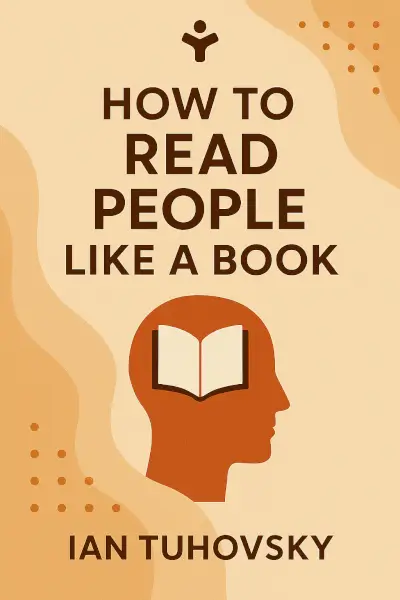
How to Read People Like a Book: Understand People Beyond Words: A Complete Guide to Accurately Reading Intentions, Body Language, Thoughts and Emotions
Ready to Take Action?
Get the Mentorist app and turn insights like these into daily habits.