The one part of your personality your friends can see better than you
There's a particular kind of confidence in declaring yourself a stable genius, the kind that tends to invite ridicule rather than agreement, because most people watching from outside can see something the person saying it cannot. That gap between how you see yourself and how you actually come across is what psychologists call a blind spot, and it turns out to be far more common, and far more specific, than most people assume.
The psychologist Simine Vazire tested this directly. Vazire had people rate themselves and their close friends on a range of traits, everything from emotional stability to assertiveness to creativity to raw intelligence, and then compared whose predictions were more accurate. The results split cleanly down the middle. People turned out to be genuinely better at predicting their own emotional stability, for instance, how anxious they actually feel giving a public talk, because that's an internal state they have direct access to and others can only guess at from the outside. But their friends were consistently better at predicting how assertive the person actually was in a group discussion, and better at guessing how they'd perform on tests of creativity and intelligence. Traits that live on the surface, visible to anyone watching, are often invisible to the person living inside them.
This explains a pattern worth naming honestly: people tend to overestimate their own intelligence, a tendency researchers found more common in men than women, and tend to believe they're more generous than they actually are, mostly because generosity is a trait worth having and being biased toward yourself is easy when no one's checking. It's also, for the same reason, almost impossible to find someone who will admit to being biased or judgmental, since claiming that trait about yourself runs directly against the ego's interest.
None of this is a flaw to be ashamed of. It's simply how self-knowledge works: some rooms in your own house you can see clearly, and others only someone standing outside the window can describe accurately. The practical use of Vazire's finding is straightforward. If you want an honest read on a trait you can't verify from the inside, someone who has watched you operate, in a meeting, at a party, under stress, will often see you more clearly than you can see yourself, and their answer is worth more weight than your instinct to argue with it.
Pick one trait you've always assumed about yourself, whether it's how assertive you are in a group or how creative your work really looks to someone else, and ask two or three people who know you well to answer honestly. Trust your own instincts more when the question is about an internal state like stress or anxiety, since that's territory you know better than anyone watching from outside. But when the question is about something visible, how you come across, how you perform under pressure, give real weight to what your friends tell you rather than defending your own version. And notice which question makes you want to flinch before you even hear the answer, because that reaction alone often points straight at the blind spot worth working on.
What You'll Achieve
The listener stops treating self-knowledge as automatically accurate and starts actively seeking outside perspective on the traits that are genuinely harder to see from inside, which improves both their self-understanding and their ability to read how others might be misjudging themselves too.
Borrow other people's view of your blind spots
*Ask two or three close people the same question*
Pick a trait you're unsure about, like how assertive or creative you really are, and ask a few people who know you well to rate you honestly. Comparing their answers reveals patterns you can't see from inside your own head.
*Trust your own read on your emotional states*
You're generally the better judge of your own stress, anxiety, or calm, since these are internal states other people can only infer. Don't override your own read here just because someone else disagrees.
*Defer to others on outwardly visible traits*
For things like assertiveness in a group or how creative your work actually looks to an outsider, other people's assessment tends to be more accurate than your own, precisely because they're watching from outside.
*Watch for the traits you'd be embarrassed to hear rated honestly*
If a question makes you flinch before you even hear the answer, that discomfort is often pointing at exactly the blind spot worth examining.
Reflection Questions
- Which trait about yourself would you be most nervous to have three close friends rate honestly?
- Can you think of a time someone else's read on your behavior turned out to be more accurate than your own?
- Do you overestimate your own generosity, intelligence, or open-mindedness the way research suggests most people do?
- Whose outside perspective on you have you been dismissing that might actually be worth listening to?
Personalization Tips
- Someone convinced they're an excellent listener asks three friends directly and discovers they interrupt more than they realized.
- A manager who assumes they come across as calm under pressure learns from a colleague that their voice noticeably tightens in tense meetings, something they'd never noticed in themselves.
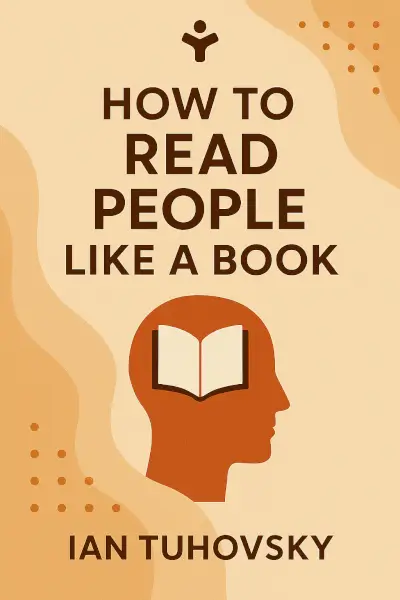
How to Read People Like a Book: Understand People Beyond Words: A Complete Guide to Accurately Reading Intentions, Body Language, Thoughts and Emotions
Ready to Take Action?
Get the Mentorist app and turn insights like these into daily habits.