Why the ability to read minds has nothing to do with being born gifted
Marta read the same two words for the third time that morning: "I'm fine." Her sister had sent them after Marta asked how the move to the new apartment was going. On paper, it was a complete sentence. It answered the question. And yet Marta sat there certain that something was wrong, without being able to say why.
That gap between what is said and what is actually going on is exactly what mind reading, in the practical sense used throughout this material, is trying to close. It has nothing to do with sorcery or a superhuman gift some people are born with and others aren't. Only about seven percent of communication is carried in the words themselves; the rest lives in tone, timing, silence, and the body. That's the real reason "I'm fine" can mean four different things depending on who says it and how.
So what does it take to close that gap reliably? Not a psychology degree, and not some inherited intuitive power either. It takes three things working together: enough knowledge to know why people react the way they do, enough observation to catch the small signals that reveal it, and enough practice to turn slow, effortful noticing into a fast, reliable instinct. Someone who has studied facial expressions but never actually watches people won't get far. Someone with sharp instincts but no grounding in how personality and context shape behavior will keep mistaking a bad mood for a personal insult. The skill lives at the intersection of all three, and like any skill built at an intersection, it has to be trained rather than simply hoped for.
This matters because the alternative to learning it isn't neutral. Believing a scrap of internet folklore, like assuming crossed arms always signal defensiveness, can lead you to misread someone worse than if you'd made no guess at all. Misreading a person is more costly than admitting you don't yet know what's going on in their head.
Marta eventually called her sister instead of texting. Within a minute of hearing her voice, the truth was obvious: nothing to do with the apartment, everything to do with a fight she'd had with her landlord that morning. No superpower was required. Just enough curiosity to go looking for the other ninety-three percent.
Start by catching yourself the next time you form a snap judgment about someone, and hold it loosely as a guess rather than a verdict. Since so much of what people communicate rides on tone and timing rather than words, make a habit of noticing those alongside whatever was actually said, especially when a message feels off. Use the low-stakes people in your life, a cashier, a neighbor, a barely-known coworker, as practice ground where nothing important depends on getting it right. And once you find out what was really going on, circle back and compare it to what you first assumed. Do this often enough, and the slow, deliberate noticing you're doing today starts turning into the kind of fast, reliable read you once thought only a few lucky people were born with.
What You'll Achieve
The listener stops treating accurate people-reading as a fixed talent they either have or lack, and starts treating it as a trainable skill built from knowledge, observation and repeated practice, which makes them more willing to test their assumptions instead of acting on them.
Build the skill instead of waiting for the gift
*Treat first impressions as data, not verdicts*
When you meet someone or read their text, resist turning your first read into a final judgment. Hold it loosely as one data point you'll test against what happens next.
*Gather the missing ninety-three percent*
Since only a small slice of communication rides on words, notice tone, timing, and posture alongside whatever was actually said, especially when a message feels flat or ambiguous.
*Practice on low-stakes people*
Try reading the cashier, the bus driver, or a coworker you barely know. Because nothing important rides on getting it right, you can experiment freely and build the habit before you need it with someone who matters.
*Review your guesses afterward*
Once you learn what was actually going on, go back and check what you missed. This is how observation turns into intuition over time.
Reflection Questions
- When was the last time you assumed you knew what someone meant, only to find out later you were wrong?
- What percentage of a recent misunderstanding came from the actual words used versus tone or timing?
- Who in your life could you practice reading this week, where getting it wrong would cost you nothing?
- What piece of 'common knowledge' about body language have you been applying without checking whether it fits the context?
Personalization Tips
- A manager notices a normally chatty employee has gone quiet in meetings and, instead of assuming disinterest, starts tracking whether it lines up with a change at home.
- A partner texting one-word replies gets asked a direct, curious question rather than being silently written off as bored.
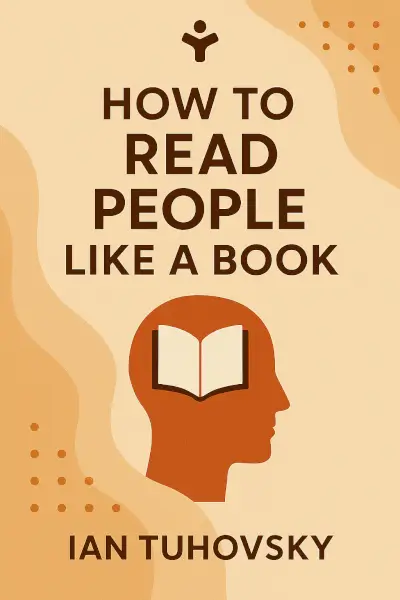
How to Read People Like a Book: Understand People Beyond Words: A Complete Guide to Accurately Reading Intentions, Body Language, Thoughts and Emotions
Ready to Take Action?
Get the Mentorist app and turn insights like these into daily habits.