Start a place practice to rewild your sense of home
You step off the curb after rain and watch water slip along the gutter, silver against dark asphalt. It disappears into a grated mouth that never explains where it goes. Today you decide to find out. A simple map shows your street belongs to a larger body, a web of small veins feeding a creek you’ve driven over a hundred times without seeing. You trace lines with your finger, feeling a little tug of belonging where there used to be blank space.
On your next walk, you pick three neighbors to learn: a towhee kicking at leaf litter, a bay laurel releasing a peppery scent when the sun hits, and a patch of lichen that looks like dried lace on a fence post. You say their names under your breath. The towhee’s call starts to separate from “bird noise” into a voice you can recognize like a friend across a room. You can smell the laurel before you see it. The lichen is just there, old and patient, doing quiet chemistry on wood.
A micro‑anecdote happens on week three. A person you’ve never met is dragging a bag of trash from the creek bank. You offer a hand and they tell you about a flood ten years ago, how the street turned to a river for a day. Now you can’t not see the slope of the road or the bend of the channel. I might be wrong, but this small knowledge changes how you move. You step around storm drains instead of over them, you look up when you hear the towhee, and you feel less like a renter of space and more like a citizen of a place.
Ecology tells you that identity is relationship, not a sealed container. Bioregional practice turns the vague “environment” into named companions and mapped flows. Noticing begets care, and care begets actions small and steady enough to matter. Your city didn’t lose its magic. It was waiting for your attention to return.
Start by locating your watershed and sketching how your block’s water flows to a creek, a river, or the bay, then adopt three neighbors—a bird, a plant, and something humble like lichen or fungus—and learn their names and habits. Walk the same route once a week for twenty to forty minutes, logging what you see and hear so space turns into relationship. Find a local steward group, say hello, and try one small task so care becomes contact, then share one finding with a friend or neighbor so the knowledge spreads roots. Give yourself a month. The place will begin to answer back.
What You'll Achieve
Internally, groundedness and a renewed sense of belonging that reduces stress. Externally, a repeatable local routine, basic ecological literacy, and first steps in community care like clean‑ups or planting.
Map your watershed and learn three species
Find your watershed
Use a local map or watershed app to locate the creek, river, or bay your street drains into. Draw it. Note headwaters, confluences, and where water meets your city.
Adopt three neighbors
Choose one bird, one plant, and one non‑charismatic being (lichen, fungus, or insect). Learn their names, behaviors, and where they live. Names deepen noticing.
Walk one route weekly
Pick the same path and take 20–40 minutes to observe. Log first and last sightings, sounds, and seasonal shifts. Repetition turns space into relationship.
Meet local stewards
Visit a park workday, native plant sale, or watershed group. Say hello, ask what the place needs, and try one small task. Care grows from contact.
Share one concrete finding
Tell a friend or neighbor where your rain goes or what your adopted bird did this week. Knowledge sticks when it’s shared.
Reflection Questions
- What did your last rainfall do on your block, and where did it go?
- Which three neighbors will you learn first, and why those?
- How does walking the same route weekly change what you notice by week four?
- Who could you invite to join one place‑based action this month?
Personalization Tips
- Health: Replace one gym session a week with a brisk watershed walk, tracking heart rate and birds heard.
- Community: Bring a neighbor to a creek clean‑up and swap stories about the block while you work.
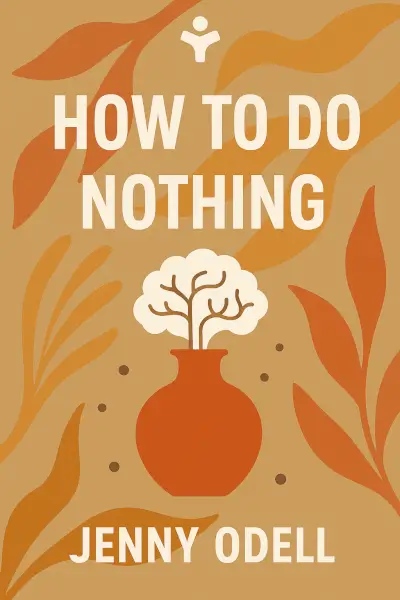
How to Do Nothing: Resisting the Attention Economy
Ready to Take Action?
Get the Mentorist app and turn insights like these into daily habits.