You lose more by mismanaging risk than by bad strategies
Risk management is not some optional add-on—it’s the lynchpin of sustainable trading. Imagine you’ve $10,000 in your account. Two percent of that is $200. You spot a Stock in Play and plan to buy at $20, but your technical stop is at $19.50—50 cents below. Now you know each share risks 50 cents, so you can hold up to 400 shares ($200 ÷ $0.50). Simple math, right? Yet most newcomers buy 1,000 shares and get wiped out on one misstep. Goodbye, account.
This 2% rule creates a buffer—even if you’re wrong four times in a row, you’re still alive to trade tomorrow. Without it, just two big losses can blow out your balance and banish you from the game. Professional firms enforce even tighter caps, firing traders who break them. Retail must be more disciplined: no excuses.
Behind this is the science of expectancy. With a 2:1 reward-to-risk ratio, hitting only 40% of your trades still results in a positive outcome. That’s math, not magic. Anyone who argues otherwise is confusing hope with strategy.
In short, guard your capital like a lifeline. It’s no fun to watch part of your hard-earned nest egg vanish because you ignored a simple percentage.
Begin by calculating 2% of your equity as the absolute cap you’ll risk on any one trade. Next, translate your intended stop-loss into dollars per share, and then divide your 2% dollar limit by that per-share amount to find your maximum share size. Finally, if a setup’s logical stop costs more than 2% of your account, simply pass. You protect your ability to trade tomorrow by respecting this uncomplicated discipline.
What You'll Achieve
Internally, you’ll gain emotional calm from knowing no single loss can destroy you. Externally, you’ll maintain a live account with consistent, statistically positive expectancy.
Master the 2% daily risk limit
Calculate 2% of your equity
Before the session, multiply your account balance by 0.02. That’s your maximum risk for any single trade today—no exceptions.
Translate to per-share risk
Define your stop-loss in dollars per share. If you plan a $0.50 stop, know that each share risks $0.50 of your 2% budget.
Compute max share size
Divide your total 2% dollar risk by the per-share risk. That equals your maximum shares for this setup.
Reject over-sized trades
If your logic stop eats more than 2%, pass on the trade or lower your share count. Discipline trumps impulse.
Reflection Questions
- How often have you risked more than 2% chasing a big score?
- What stops or tactics can help you enforce this limit automatically?
- How will avoiding a single large loss impact your confidence tomorrow?
Personalization Tips
- At work, you never risk more than 2% of client capital on any single project proposal.
- In fitness, you rarely exceed a 2% weekly increase in your workout load to avoid injury.
- In relationships, you avoid revealing more than 2% of your deep history until trust builds gradually.
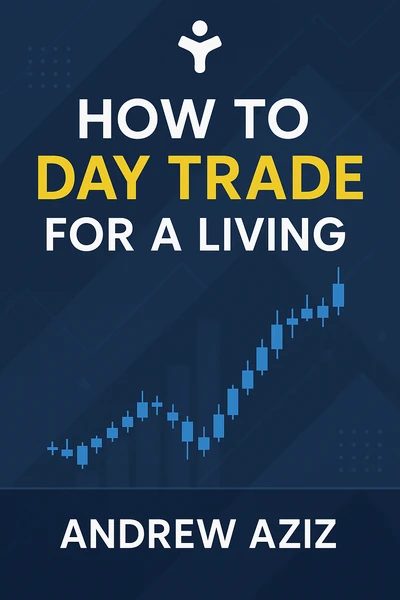
How to Day Trade for a Living: A Beginner's Guide to Trading Tools and Tactics, Money Management, Discipline and Trading Psychology
Ready to Take Action?
Get the Mentorist app and turn insights like these into daily habits.