Spot recombination opportunities hiding in plain sight
Innovation is often a remix of existing ideas in new contexts. Remember sliced bread? It was just bread plus machinery plus packaging, plus a sprinkle of serendipity—a recombination of four basic elements.
In genetics, we call this ‘recombinant innovation’: nature’s way of remixing DNA to yield novel species. In human tech, it’s our way of stacking past inventions—fire, levers, chemistry, glass—into fresh systems.
When Leonardo da Vinci studied birds to design wings, he cross-pollinated biology with flight mechanics. When the container ship was born, it fused trucking, stevedoring and shipping lanes into a unified system, transforming trade.
Your next big idea might be under your nose—two unconnected tools in your kitchen, an app and a hobby. Imagine how fusing them could solve an unmet need. That’s the power of recombination—finding the chromosome of invention hiding in plain sight.
First, list each component of a tool you love, tracing its ‘ancestry.’ Then, draw a Venn diagram that merges two everyday items you’ve never paired before, noting their combined features. Finally, take a low-fidelity stab at their mash-up—duct tape and kitchen scraps will do. Often, an impromptu prototype sparks insights that a clean board can’t provide. Give it a spin tonight.
What You'll Achieve
Internally, you’ll view the world as an open lab of combinable parts, boosting creative confidence. Externally, you’ll prototype fresh solutions quickly, discover new product concepts and accelerate innovation.
Map your idea DNA
Trace related breakthroughs
Pick any tool you rely on—like your coffee mug or smoothie blender—and list its five ancestral ingredients: glass, water, fire, insulation, motor. Notice the pattern of recombination.
Diagram combo potential
Draw Venn diagrams merging features from two unrelated items, such as a book and a phone. Brainstorm three novel products that could spring from their overlap.
Prototype remix at home
Take household items—an umbrella and a backpack—and bolt them together with duct tape. This low-fidelity experiment often sparks fresh insights you can refine later.
Reflection Questions
- Which two everyday items in your home never seemed related—how could you combine them?
- Where have past successes in your life been simple mixtures of old ideas?
- What’s one mashup you can prototype with duct tape in the next 15 minutes?
Personalization Tips
- At work: Cross-map “video conference” and “team-building retreat” to spawn new hybrid meeting formats.
- Health: Merge “fitness tracker” and “garden tools” to invent an app nudging scheduled outdoor chores.
- Parenting: Blend “storybook reader” and “smart speaker” to prototype an interactive bedtime story device.
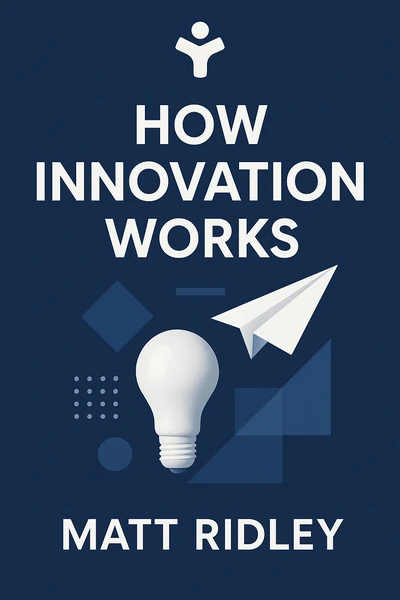
How Innovation Works: Serendipity, Energy and the Saving of Time
Ready to Take Action?
Get the Mentorist app and turn insights like these into daily habits.