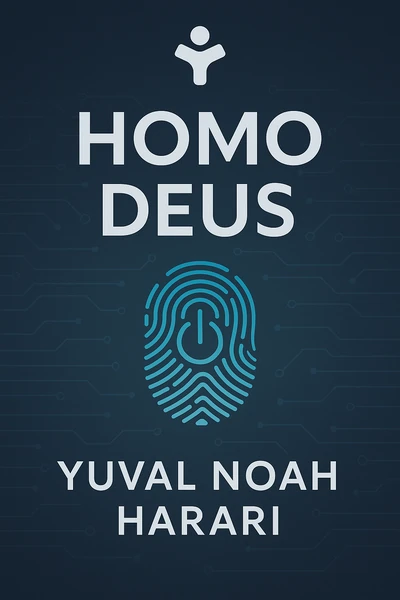
Homo Deus: A History of Tomorrow
How imagined orders shape our world and what comes next
About This Book
Imagine a world ruled not only by governments and armies, but also by stories you and millions of strangers believe. Sapiens reveals how our ability to weave shared fictions—gods, nations, corporations—allowed humans to cooperate in unprecedented numbers, conquer famine, plague and war, and build cities, empires and temples. You’ll discover why emotions are not mystical forces but data-processing algorithms, how writing turned paper into power, and why the future hinges on the narratives we choose. Packed with counterintuitive insights and vivid examples, this book will transform how you see your place in history—and how you can shape what’s next.About the Author
Yuval Noah Harari is a historian and bestselling author whose work has been translated into over fifty languages. He holds a PhD from Oxford and is a professor at the Hebrew University of Jerusalem. Harari’s gift for turning complex research into clear, riveting narratives has made him one of the most acclaimed thinkers of our time. When he’s not writing, he practices meditation, forges new ideas on human consciousness, and travels the world exploring the frontiers of science and history.
Biggest Takeaway
You’ll learn to spot the hidden algorithms behind your emotions and decisions, harness the power of shared stories to influence group behaviour, and apply these insights to leadership, teamwork, and personal growth. You’ll gain tools to bridge the gap between individual action and large-scale impact, foresee how today’s fictions can rewrite tomorrow’s reality, and choose narratives that maximize your influence and resilience. Whether you’re a manager, activist or simply curious, you’ll emerge better equipped to master the human web that shapes our lives.
Key Insights from This Book
Explore the most important ideas and learn how to apply them in your life.
Your emotions are not mystical powers but finely tuned algorithms
Fictions like money and nations let strangers cooperate at scale
Writing turned paper into power and reshaped reality
It wasn’t sharper tools but flexible cooperation that made us rulers
Every forecast changes the future in its own direction
Consciousness remains the hardest puzzle for science
Religion doesn’t just invoke gods—it scripts human cooperation
Modern life asks us to trade meaning for power and resilience
Want More Actionable Insights?
Get the Mentorist app and turn knowledge from hundreds of books into daily actions.