Spot the hidden dance draining your relationship of warmth
You’ve had those arguments where you can almost set your watch by when things spiral out of control. She snaps a sarcastic remark and you clam up. He shuts down and you prod harder. It feels like you’re doing a frantic dance, but you don’t know the steps.
In the 1970s, marriage researchers identified the Demand-Withdraw cycle. They watched couples get caught in 'Protest Polkas'—when one partner pursues and the other withdraws. Each move feeds the next. Sound familiar? Later, they described 'Find the Bad Guy' and 'Freeze and Flee.' No matter who blames or pouts, it all tracks back to attachment panic—fear of being alone or rejected.
Understanding these 'Demon Dialogues' is like seeing your relationship in a new light. Instead of blaming your partner for 'always nagging' or 'never listening,' you know you’re both responding to primal survival alarms. That realization gives you the power to step out of the loop.
Next time you feel the heat, hit pause. Name the dance: 'Stop-Go Tango' or 'Protest Polka.' Saying it aloud lets you break the trance. You can choose to change the steps, stop the spin, and reconnect with real warmth—rather than just reacting.
When you sense a fight brewing, slow down and say, “I think we’ve started our Protest Polka.” Point it out, don’t point fingers. Then pick one small thing—take a breath, step into a hug. You’ll see the dance loses momentum and makes space for calm connection. Give it a try tonight.
What You'll Achieve
You’ll learn to catch negative spirals early and stop blaming cycles. Externally, you’ll reduce heated fights and increase moments of calm connection.
Pinpoint your negative interaction loops
Describe your last heated argument
Spend five minutes writing a neutral account of the last disagreement you and your partner had. Focus only on what happened, not who was to blame.
Identify each person’s move in the loop
Under the incident, note one action each of you took (e.g., criticism, stonewalling). Label them—’I attacked,’ ’They withdrew.’ You’ll see a clear cycle.
Trace the emotional fuel
Next to each move, jot the core emotion you felt (e.g., fear, shame, anger). This connects the steps to the attachment alarm driving the cycle.
Name your dance
Give your pattern a nickname—'Stop-Go Tango' or 'Freeze and Flee.' Naming it weakens its power and helps you catch it early next time.
Reflection Questions
- What name would you give your recurring conflict pattern?
- Which move do you tend to play—pursuer or withdrawer?
- What raw emotion fuels your part in the loop?
- How hard is it to name and halt the cycle in the moment?
Personalization Tips
- At work, a manager labels recurring email spats with a colleague as the “Draft-Delete Cycle.”
- At home, a parent calls their morning rush fights the “Breakfast Brawl Polka.”
- In sports, teammates tag their blame spirals the “Unforgiving Fast Break.”
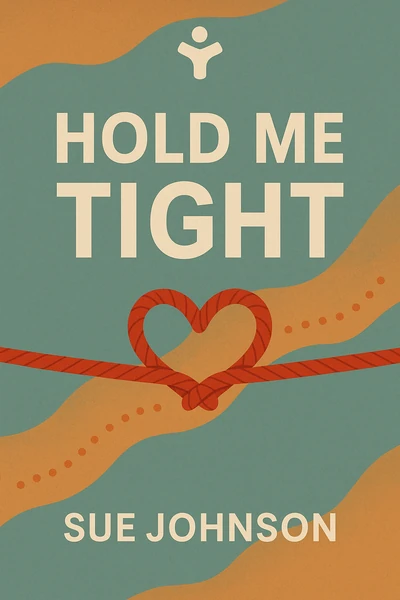
Hold Me Tight: Seven Conversations for a Lifetime of Love
Ready to Take Action?
Get the Mentorist app and turn insights like these into daily habits.