Your gut microbiome shapes your brain’s mood and memory
You’re in the school cafeteria, scanning the crowded lunch line. Pizza slices glare at you from behind the sneeze guard, tempting you with a cheesy promise of comfort. Instead,you reach for the jar of sauerkraut on your tray and a side salad drizzled in olive oil. As you pop a forkful of fermented cabbage into your mouth,you’re not just tasting tangy crunch—you’re nourishing a bustling city of microbes in your colon.
Earlier that morning,you’d tossed garlic and kale into a quick stir-fry for breakfast. When you eat these foods, your gut bacteria feast on their fibers, producing butyrate,a short-chain fatty acid that dampens inflammation and signals the brain to make BDNF. Later,you find yourself calmly powering through an essay assignment, surprised at how clear your thoughts feel.
Over weeks, you add fiber—from leeks in soup to jicama sticks—to your meals, and your kombucha habit turns heads among friends. You ditch the processed snack aisle for fresh produce at the farmer’s market. Even your dog perks up, thrilled by extra park-time ozone, spreading soil bacteria all over you in the best possible way.
The science? Your large intestine, home to thirty trillion bacteria, thrives on fiber and polyphenols. When you feed these microbes, they pump out butyrate and other anti-inflammatory compounds, sealing up your gut lining and tuning your immune system. This ally network sends chemical messages up the vagus nerve,quieting stress in your brain,mending barriers, and sharpening memory.
Imagine starting your day with a cup of kombucha and a bowl of sautéed garlic and kale—knowing you’re fueling microbes that transform fiber into butyrate, the brain’s natural anti-inflammatory. At lunch,you skip the chips and instead grate raw carrots into your salad, season with extra-virgin olive oil, and toss in some kimchi for a probiotic boost. As you work through the afternoon, you feel a steady focus, free of jitters or carb crashes. Before dinner,you spend ten minutes barefoot outside—inviting fresh microbes into your life. Tonight, enjoy roasted Brussels sprouts over a bed of arugula,and consciously savor each bite. Give your gutsome love—and watch your brain reward you.
What You'll Achieve
Internally,you’ll feel more emotionally balanced, less “hangry,” and resilient to stress. Externally,you’ll experience steadier energy, improved digestion,and sharper memory and mood.
Feed your inner ecosystem daily
Stock up on diverse fibers
Shop these prebiotic staples: kale, garlic, leeks, arugula, jicama, and unripe bananas. Aim for at least five different vegetable sources each week.
Add fermented foods
Incorporate one serving daily of kimchi, sauerkraut, kefir, or kombucha. These transient probiotics help strengthen your mucosa and train your immune system.
Limit processed foods
Replace snacks like chips and candy bars with raw nuts or berries.Purge products with emulsifiers (look for “polysorbate 80” or “carboxymethylcellulose”) to protect your gut lining.
Stay wild
Regularly spend time barefoot in nature, garden, or hug a dog to expose yourself to helpful outdoor microbes and foster a richer home microbiome.
Reflection Questions
- When did you last eat a truly fibrous meal, and how did your body feel afterward?
- What processed foods do you turn to when you’re stressed, and how might you swap them?
- How might you incorporate a barefoot walk into your daily routine to reconnect with nature?
Personalization Tips
- Student: swap potato chips for kale chips and pickled cucumbers during study breaks
- Chef: ferment a batch of sauerkraut or kombucha to have on hand for yourself and bring to dinner parties
- Traveler: carry dried inulin-rich chicory root or jerky to nourish your gut when fresh produce is scarce
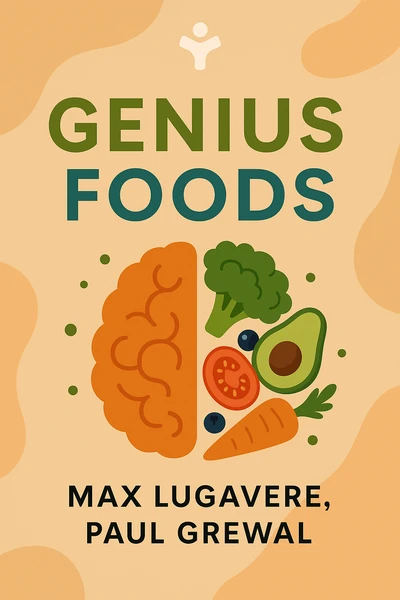
Genius Foods: Become Smarter, Happier, and More Productive While Protecting Your Brain for Life
Ready to Take Action?
Get the Mentorist app and turn insights like these into daily habits.