Follow the ABCDE Rules to Crush Your To-Do List
You open your inbox to find dozens of messages clamoring for attention. Your heart races. Where to start? That’s exactly when you pull out the ABCDE system you’ve practiced. You write down everything—emails, errands, calls—and label each one. “Call Dad about Sunday” becomes A-2 because missing family time has real consequences. “Update smartphone apps” gets dumped to E—no points for busy work.
Once tasks are labeled, your brain relaxes. You ditch distractions until the A’s are done. There’s clarity in knowing, “This really matters; that can wait.” Within minutes, you’ve tackled A-1—an urgent client proposal—then A-2, followed by B tasks like reviewing next week’s schedule. The rest of the day flows smoothly because you’ve defused the to-do list panic.
Research in behavioral economics shows that prioritization frameworks reduce decision fatigue and boost completion rates by up to 30%. By practicing ABCDE you’re giving your prefrontal cortex a road map, not a random chaos of demands. Next time you’re swamped, use A–E; you’ll be amazed at how fast your to-dos get done and how calm you feel.
Imagine checking your list, scribbling ABCDE beside each item, then sternly refusing to start anything other than A-labelled work. You’ll feel your shoulders drop as you dive into that first A-task. Give it a try this afternoon.
What You'll Achieve
You’ll gain calm confidence and conquer decision paralysis by clearly ranking your tasks. With your energy focused on must-dos, you’ll complete high-impact work faster and avoid getting sidetracked by busy-work.
Rank your tasks with ABCDE labels
List every upcoming task
Write out each task you need to complete today—big or small—without judging them yet.
Assign A–E labels
Mark each task A (must do), B (should do), C (nice to do), D (delegate), or E (eliminate) based on impact and consequences.
Order the A’s
If multiple A tasks exist, rank them A-1, A-2, etc., to create clear priorities for your day.
Resist distractions
Work through A tasks until they’re done before touching any B, C, D, or E items—and remove E tasks completely.
Reflection Questions
- Which tasks today am I giving the wrong label out of habit?
- How many tasks could I delegate or eliminate right now?
- What would change if I refused to start any B, C, or E task until all A’s are done?
Personalization Tips
- A teacher labels grading final exams as A-1, preparing a new lesson as B, chatting with colleagues as C, and printing handouts as D.
- A freelance designer delegates ops tasks (D), eliminates outdated subscriptions (E), focuses on client #1 deliverable (A-1).
- A student avoids low-impact group chat (E), asks a friend to proofread a paper (D), and studies for tomorrow’s exam (A-1).
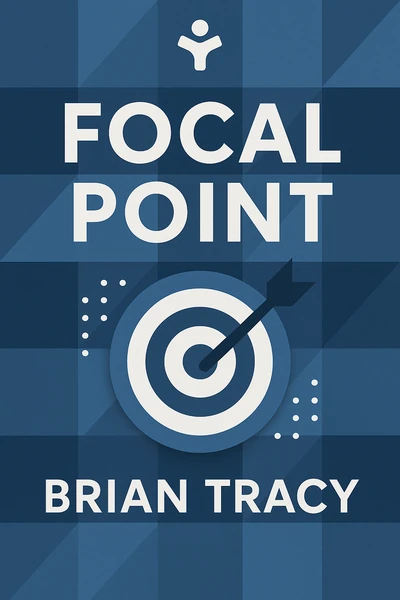
Focal Point: A Proven System to Simplify Your Life, Double Your Productivity, and Achieve All Your Goals
Ready to Take Action?
Get the Mentorist app and turn insights like these into daily habits.