Turn words into unforgettable memories with images
When I first tried to learn Russian, every noun felt like a slippery eel—just keep trying to grasp it, and it wriggled free. Then I discovered the power of images. I was on the subway one morning, staring at my flash card for the word мойка (washer). Instead of English, I saw a storyboard: a dusty grandmother scrubbing dishes ocean-deep in suds. Suddenly, that image and its accompanying Russian word became one. Every time I peeked at that picture—steam billowing, soapy waves—I instantly thought мойка. Within days, I was breezing through that entire category: плита (stove), холодильник (fridge), душ (shower). The secret wasn’t rote repetition; it was binding sounds and spellings to a vivid, personal story.
Our brains are wired for pictures, not word lists. In the 1960s, researchers showed college students thousands of random magazine images and later quizzed them on recognition. Even five days and ten thousand images later, recall hovered above 90 percent. Written words don’t stand a chance in comparison. When you pair a new word with a vibrant image and a dash of personal connection, you fire circuits across your auditory, visual, and emotional centers—neurons that fire together wire together. This multi-sensory cocktail makes that word unforgettable.
By swapping translations for images, you force your brain to form a direct link between foreign word and concept. Each flash-card review becomes a lightning-quick reconnection of that network, giving you fluency that feels automatic. You’ll stop scrambling for the English equivalent, and instead speak from that intuitive, unforgettable memory.
Picture this: you’re on your phone, reviewing a flash card for a tricky new word, and instead of English flashing in your eyes, you see a snapshot so vivid you can almost smell it. That’s the magic of images. Next time you learn a word—go to Google Images in your target language, find the most electrifying picture, and slap it on your flash card without any English translation in sight. On the back, jot a one-word reminder that ties it back to your life. Then every day, challenge your brain to call up that foreign word at the mere hint of that picture. In minutes, you’ll start thinking in images, and it’s in those images that fluency truly takes root.
What You'll Achieve
You’ll build direct connections between foreign words and mental images, boosting recall by six-fold and speeding vocabulary acquisition. Over time, you’ll stop relying on translations and start thinking in the new language itself.
Bind new vocabulary to visual stories
Pick a vivid image online
Search your target word on Google Images inside Google Translate and scan for the most striking, specific picture—silver-backed gorilla in the mist or a red umbrella in a crowd. Choose one that jumps out at you.
Skip translations for pictures
On your flash card’s front, put only the image and the foreign word. Don’t write the English meaning—force your brain to connect the picture and new word directly.
Add a personal reminder
Jot a short note on the back side—“Grandpa’s dog” or “Paris 2019”—so each flash-card review triggers that little memory tangent, binding personal emotion to the word.
Review with recall in mind
When you see the picture alone, resist guessing the English translation—instead, recall the foreign word. This automatic shift builds direct foreign-concept links that last.
Reflection Questions
- Which foreign words do you still translate in your head and why?
- What image makes a current vocabulary card unforgettable to you, and how can you find a similar one?
- Which three words could you bind to personal memories today to make them stick?
- In what everyday moments could you sneak in a five-second visual flash-card review?
- How can you turn your next difficult word into a mini cinematic scene?
Personalization Tips
- Travel: Learn “train station” by picturing the empty platform where you waited in Rome last summer.
- Health: Memorize “kale” with a photo of your first Thanksgiving salad—that weird green you secretly liked.
- Parenting: Teach “storybook” to yourself by recalling the tattered fairy-tale volume you read to your niece.
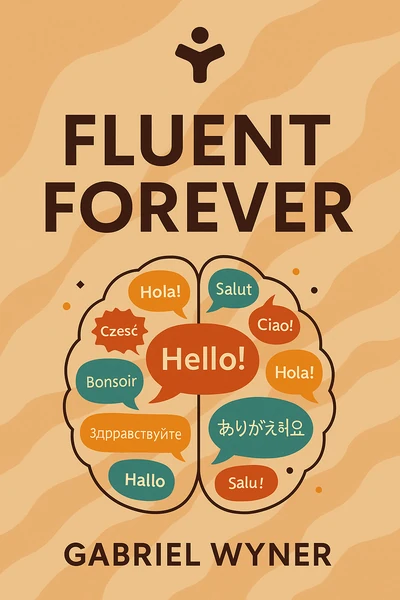
Fluent Forever: How to Learn Any Language Fast and Never Forget It
Ready to Take Action?
Get the Mentorist app and turn insights like these into daily habits.