Why cutting goals in half boosts your odds of success
When we set goals—like dropping 20 pounds or publishing 60 blog posts—we often overshoot what’s humanly doable in the given timeframe. Psychologists call this the planning fallacy: we chronically underestimate the time needed. Think of it like trying to sprint a marathon—you’re bound to burn out.
Cutting your goal in half recalibrates your expectations immediately. Instead of chasing the whole 20 pounds, aim for 10. The math is simple: meeting your smaller goal almost guarantees you’ll do more than if you’d pushed for the larger one and then quit. Data from real-world challenges shows participants who halved their targets finished at a 63 percent higher rate.
This counterintuitive shortcut quiets perfectionism’s taunting—“You’ll never make it”—and replaces it with early wins that fuel motivation. In practice, half-sized goals light the path to finishing because your confidence grows with each completed milestone.
Pick your biggest goal and chop it in half, or give yourself twice as long. Write it down and tell someone who’ll ask you about it. Then track every small victory and watch how those early wins build momentum, making your finish almost inevitable. Give yourself permission to start small.
What You'll Achieve
Boost confidence with early tangible wins, reduce overwhelm, and significantly improve finish rates by pacing your progress.
Slice your goal to size
Write down your big goal
Be specific—a 10-pound weight loss, a 5K run, or 50 pages of writing in 30 days.
Half the amount or double the time
If you aimed for 10 pounds, drop it to 5. If you focused on 30 pages, aim for 15. Or extend your 30-day deadline to 60 days.
Commit publicly
Tell a friend or post online about your new, size-reduced goal so you hold yourself accountable.
Celebrate early wins
Track each day you meet your smaller target and acknowledge the win—an instant motivational boost.
Reflection Questions
- What one goal feels too big right now? How would it change if halved?
- How much time can you realistically commit each day?
- What small celebration can you use to mark each micro-milestone?
Personalization Tips
- A college student plans to outline a full thesis in a week but commits to a thorough 3-page draft first, then moves on.
- A startup founder sets out to secure 10 investors in a month but scales back to three strong meetings and nails them.
- A musician wants to record an album in a month and instead commits to mastering two songs deeply, then builds momentum.
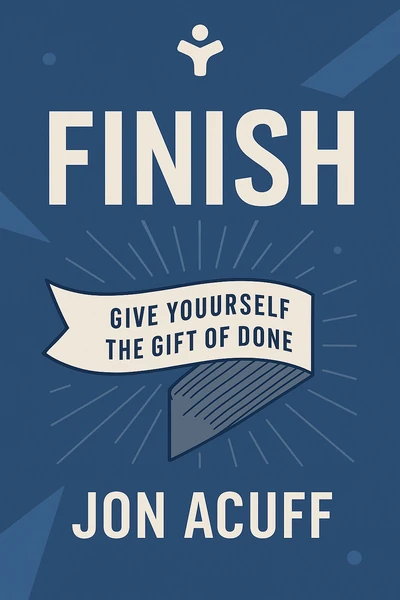
Finish: Give Yourself the Gift of Done
Ready to Take Action?
Get the Mentorist app and turn insights like these into daily habits.