Saying no with grace earns respect and protects what matters
A colleague stops by with the words that always get you: “It’s quick.” You feel your mouth shape a yes. Instead, you breathe and count to three. “Let me check my calendar and get back to you,” you say. You step away, look at your plan, and see the cost clearly. You write back, “Thanks for thinking of me. I can’t take this on by Friday. If it helps, I can review two slides next Wednesday.” The conversation ends politely. Your main project moves an inch this afternoon instead of stalling.
At home, a friend texts about a big weekend plan. You’re spent and need a quiet night. You type, “I’m cheering you on from the couch tonight. Coffee next week?” The phone buzzes once more, “Totally get it,” and then it’s quiet. You feel an odd mix of relief and strength.
Declining with warmth is a skill. You write three phrases on a sticky note near your screen. You practice the awkward pause. You remind yourself: I’m saying no to the request, not to the person. Over the next few weeks, something shifts. People stop dumping last‑minute tasks on you, and the work they bring fits your strengths better.
Social pressure pushes automatic yeses. Scripts reduce cognitive load and make the respectful decline easier to deliver under stress. A brief pause interrupts the habit loop. Asking what should be deprioritized surfaces trade‑offs, often leading requesters to solve their own problem. Over time, clear boundaries build trust because people can predict your response and plan accordingly.
Draft three short decline scripts and keep them visible. When a request arrives, pause for a slow count of three, separate the person from the ask in your mind, and default to “Let me check my calendar” so you can decide away from pressure. If it’s a boss, pair your no with “What should I deprioritize?” so you protect your priorities without posturing. Try each script once this week and notice how people respond. Start tonight.
What You'll Achieve
Reduce guilt and resentment while earning respect for clear priorities; protect deep work time and strengthen relationships through honest communication.
Prepare your respectful decline scripts
Write three go‑to phrases
Draft short responses you can deliver calmly: “Thanks for thinking of me, I’m not able to take that on.” “Yes—what should I deprioritize?” “I can’t do X, but I can do Y.”
Practice the awkward pause
Count 1‑2‑3 silently before answering. The pause reduces the urge to fill the space with an automatic yes.
Separate person from request
Privately note, “I value them, and I’m declining this ask.” This shift lowers guilt and keeps the relationship warm.
Default to calendar check
Say, “Let me check my calendar,” then decide away from pressure. Follow up with a clear answer within 24 hours.
Reflection Questions
- Which script feels most natural for me to say under pressure?
- Where do I confuse declining a request with rejecting a person?
- What small offer (Y for X) can I make without harming priorities?
- Who needs to hear a boundary from me this week?
Personalization Tips
- • Team: When asked to ‘just jump on this,’ reply, “Happy to help—what should come off my plate to make room?”
- • Friends: For a last‑minute party, “I’m cheering you on from the couch tonight. Let’s grab coffee next week.”
- • Clients: “We can add that feature next quarter. For this release, we’re focusing on stability.”
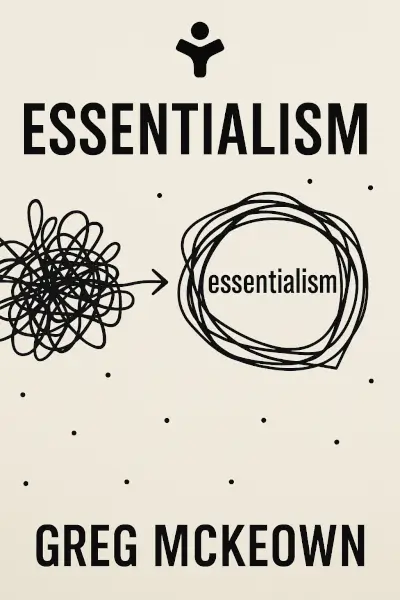
Essentialism: The Disciplined Pursuit of Less
Ready to Take Action?
Get the Mentorist app and turn insights like these into daily habits.