Beat procrastination by eating your hardest task first every morning
You’ve had mornings where your coffee goes cold while you circle your inbox, convincing yourself you’re “warming up.” The tough task sits in the corner of your mind like a shadow, getting heavier by the minute. Today, try something different. Last night you wrote one line on a sticky note and set it on your keyboard: “Finish the grant outline.” When you sit down, your phone is in another room and a 90-minute timer is already set. Before your brain can bargain, you open the document and type the first subheading.
Ten minutes in, the resistance fades. The outline starts to grow ribs and muscle. A fog lifts, and ideas connect that felt scattered yesterday. Your watch buzzes once, almost out of habit, but you ignore it. You rearrange a section, delete a paragraph that never belonged, and jot a quick note for a source you’ll add later. By minute forty, you’re in a groove and the room feels quieter than usual, even though the city hums outside.
Halfway through, a small voice suggests checking messages “just for a second.” You smile, sip the water you set out, and keep typing. A colleague once told you, “I might be wrong, but a clean start changes the whole day.” You see what he meant. The task that felt like a mountain now feels like a path. When the timer ends, you add two final bullets, breathe out, and mark it done. The sticky note goes into a small jar on your shelf labeled Wins.
What happened is simple neuroscience and behavior design. Starting releases tension by shrinking the unknown, and completing a meaningful task triggers endorphins and dopamine, the brain’s natural rewards. Beginning early leverages high willpower hours, and a short ritual—note on the keyboard, timer, water—reduces “activation energy,” the initial effort to begin. Repeating this loop, especially in the same context each morning, rewires your identity toward “I’m someone who handles the hard thing first.”
Tonight, pick your frog and write it on a sticky note so it’s waiting on your keyboard. In the morning, clear your space, put your phone in another room, and set a 90-minute timer. Don’t negotiate with yourself—count down from three and take the first tiny action, like opening the file or writing a heading. Work straight through, ignoring pings, and when you finish, record the win in a simple tracker with one sentence about what made starting easier. Keep that note visible as a reminder that momentum beats motivation; try it tomorrow again.
What You'll Achieve
Build an identity as someone who starts and finishes the hardest task first, reducing anxiety and increasing daily output and confidence.
Launch a 90‑minute morning frog sprint
Choose today’s frog before bed
Write down the single task that would make today a win if completed. Make it concrete and finishable, like “submit proposal draft” or “study chapter 4 and do 20 practice problems.” Place the note where you’ll see it first thing.
Prepare the workspace
Clear your desk, open only needed tabs, lay out files, and fill your water bottle. Reducing friction lowers the activation energy to start.
Block 90 minutes device-free
Silence notifications, set your phone in another room, and use a simple timer. Tell teammates you’ll be unreachable for the block and give them an emergency number if truly necessary.
Start without negotiation
Count down 3-2-1 and do the first small action, like opening the file or writing the title. Momentum beats motivation.
Finish and log the win
Mark complete in a visible tracker. Write one sentence on what worked to make starting easier. This reinforces the habit loop with a clear reward.
Reflection Questions
- What tiny ritual could make starting unavoidable tomorrow morning?
- Which single task, if completed by 10 a.m., would make the day a clear win?
- What usually derails your first 30 minutes, and how will you block it?
- How will you reward yourself immediately after finishing?
Personalization Tips
- Student: Do the toughest assignment right after breakfast, then attend classes with a clear head.
- Manager: Make the hardest client call at 8:30 a.m., then process emails.
- Parent: Handle the monthly budget first thing Saturday, then enjoy the day without a mental tab open.
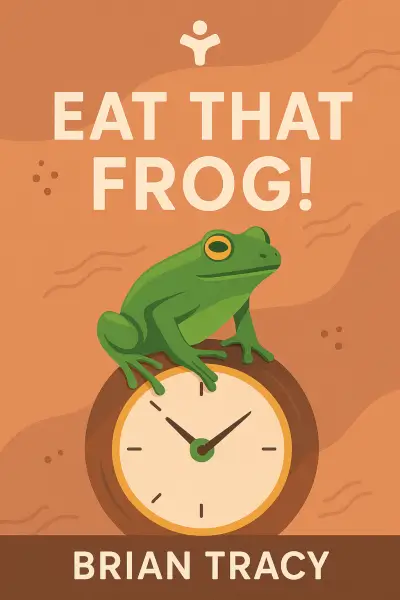
Eat That Frog!: 21 Great Ways to Stop Procrastinating and Get More Done in Less Time
Ready to Take Action?
Get the Mentorist app and turn insights like these into daily habits.