Name analysis paralysis fast and break it with tiny moves
You refresh your inbox and skim the same message again. The subject line hasn’t changed, but your stomach still dips. You click through a spreadsheet you’ve opened twice already and reach for your coffee, now a little too cold. You tell yourself you just need one more detail, but you know what’s happening—everything is moving except your decision. You whisper, “I’m spinning,” and the word lands like a small anchor.
You glance at your notes. Both options are good, not identical, but both will work. That’s the trap. Your brain keeps chasing a certainty that isn’t coming. You flip a coin, not to let chance decide your future but to hear your reaction. It lands on tails, and a quiet groan escapes before you can explain it away. There it is—your preference, hidden under all that polite analysis.
You set a ten-minute timer and do the single thing that turns a possibility into a commitment. You pick a time and send the calendar invite. Your phone buzzes with a quick “Got it, see you then.” The relief is physical—a softening in your shoulders you didn’t notice were clenched. You jot one sentence in your notebook: “I chose A because it fits my constraints this month.” Two minutes later, the urge to reopen the decision fades.
Last week you tried the same pattern on a smaller choice—two paint colors, both fine. You flipped a coin, felt a twinge, and picked the other color. It dried beautifully. This micro‑anecdote matters because your brain is learning that action is safe, even when it’s not perfect.
Under the hood, you’re applying two evidence-backed ideas. First, satisficing—choosing a good‑enough option—beats maximizing when options are similar, especially under uncertainty. Second, action creates information. A tiny commitment collapses endless hypothetical paths into one real path, reducing cognitive load and rumination. Label the loop, downshift your goal from Best to Move Forward, then take the smallest decisive step. Your brain will thank you with energy you can spend somewhere that matters.
When you catch yourself looping, name it out loud—“I’m spinning”—so you stop chasing certainty and start noticing. Ask if you’re choosing between two good options, then lower the bar to “good enough that moves me forward.” Flip a coin to listen to your gut, not obey it, and use that reaction as data. Set a ten‑minute timer and take one irreversible step, like sending the invite or booking the slot, then lock the decision with a one‑sentence reason in your notes. Treat this like a drill you can run anywhere, any day—try it once this afternoon and feel the lift in your shoulders. Give it a try today.
What You'll Achieve
Internally, develop calm confidence by recognizing and interrupting analysis paralysis. Externally, reduce decision time by 50% on low-stakes choices and close open loops quickly so projects move forward.
Shrink the decision until it moves
Spot the stuck pattern
Notice repeating loops: reopening tabs, rereading the same email, or asking for “one more” opinion. Say out loud, “I’m spinning, not deciding,” to shift from emotion to observation.
Run a reality check
Ask, “Are there two or more good options?” If yes, perfection isn’t required. Your goal changes from Best to Good Enough That Moves Me Forward.
Flip a coin to reveal preference
Assign each option to heads or tails, flip, then watch your gut. Relief or disappointment is data, not destiny. Choose accordingly.
Act in 10 minutes or less
Set a timer and take the smallest irreversible step: book the slot, send the email, put the item in the cart. Momentum kills indecision.
Close the loop on purpose
After acting, write one sentence: “I chose X because Y.” This prevents backtracking and teaches your brain a repeatable pattern.
Reflection Questions
- Where do I most often re-open the same decision?
- What would “good enough that moves me forward” look like for that choice?
- Which tiny, irreversible step could I take in under 10 minutes?
- How will I record my reason to prevent backtracking?
Personalization Tips
- Work: You’ve shortlisted two solid candidates. Flip a coin to surface your leaning, then schedule an offer call before lunch.
- Health: Stuck between two physical therapists? Book one evaluation this week and calendar a review after the first session.
- Relationships: Unsure which weekend plan to pick? Choose the option that aligns with your values (family time or rest) and text confirmations now.
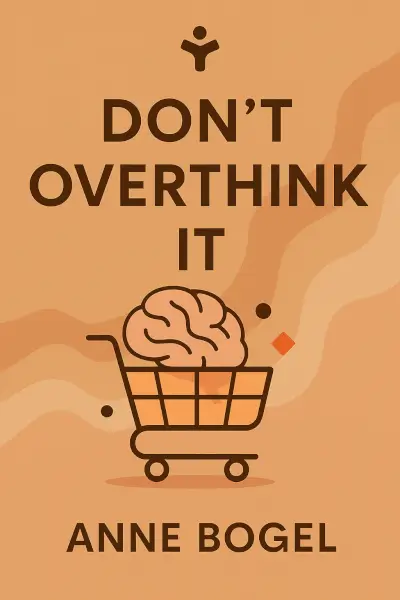
Don't Overthink It: Make Easier Decisions, Stop Second-Guessing, and Bring More Joy to Your Life
Ready to Take Action?
Get the Mentorist app and turn insights like these into daily habits.