Edison napped holding steel balls to solve his hardest problems
When Thomas Edison hit a particularly stubborn problem, he had an odd routine. He'd sit in his chair, a steel ball held in each hand, and let himself drift toward sleep. As he slipped past the edge of consciousness, his grip would loosen, the balls would drop, and the sound would jolt him awake, often with a solution to his problem arriving right along with it.
Albert Einstein had his own version. Stuck on a difficult problem, he wouldn't push harder at his desk. He'd put the work down and play the violin. According to the account Joseph Nguyen retells, the answer would arrive seemingly out of nowhere while he played, not because he'd forced it, but because he'd stepped away from the effort that had been blocking it.
Nguyen uses both examples to argue for something counterintuitive: that our best insights don't come from thinking harder, they come from creating space by not thinking at all. He compares an overfull mind to a teacup poured so full that nothing more can be added; new ideas simply have nowhere to land until something empties out first. Rest, in this view, isn't a break from the real work, it's where the real work often finishes itself, the same way an athlete's muscles actually build strength during recovery rather than during the workout itself.
The process Nguyen lays out for using this deliberately has three parts. First, recognize that your current thinking, built entirely from past experience, is the thing producing the feeling of being stuck, not the problem itself. Second, create space by consciously stepping back from manual effort and trusting that an answer will come, without insisting on controlling exactly how or when. Third, notice whatever feelings arise as you let go, and meet them with patience rather than pushing past them, since Nguyen argues the answer tends to arrive alongside a felt sense of ease rather than strain.
He's careful to note this isn't a claim that effort or expertise don't matter; Edison and Einstein had both spent enormous effort mastering their fields before the steel balls or the violin ever entered the picture. The point is narrower: once you've done the preparation, forcing the final insight through sheer strain tends to produce less than simply stepping back and letting the space do the rest.
When you're genuinely stuck, start by naming what's actually happening: your existing thinking, built from everything you already know, is what's producing the stuck feeling, not some impossibility in the problem itself. Deliberately step away from it rather than pushing harder, and do something that quiets your mind, whether that's a walk, a nap, or, as odd as it sounds, holding something in your hands the way Edison did. Let go of needing to control exactly how or when the answer shows up, and trust the space you've created to do some of the work for you. When an idea finally does surface, notice whether it arrives with a sense of ease rather than strain, since that lightness is usually the sign that it came from stepping back rather than from grinding harder.
What You'll Achieve
You start treating rest and stepping away from a hard problem as a legitimate part of solving it, not procrastination, which means fewer forced, mediocre solutions and more moments where the real answer arrives on its own. You'll likely notice yourself taking more deliberate breaks mid-problem instead of pushing through exhaustion.
Steps to create space for insight to arrive
Name the thinking as the cause before trying to solve anything
When stuck on a problem, first acknowledge that your current thinking, built from past experience, is producing the stuck feeling, rather than assuming the problem itself is unsolvable.
Deliberately stop working on it
Step away from the problem entirely instead of pushing harder, and do something unrelated that quiets your mind, whether that's a walk, music, or rest.
Surrender the how and when
Trust that an answer will come without deciding in advance what form it should take or when it must arrive, which keeps you from forcing a premature or forced solution.
Notice the feeling that arrives with the answer
When an idea does surface, pay attention to whether it comes with a sense of lightness or certainty. That quality is a sign it came from stepping back, not from more effortful thinking.
Reflection Questions
- What problem are you currently trying to force through sheer effort that might benefit from you stepping away instead?
- Can you recall a time an answer arrived while you were doing something completely unrelated to the problem?
- What would your version of Edison's steel balls or Einstein's violin look like in your own routine?
Personalization Tips
- A writer stuck on a plot problem who goes for a run and finds the fix arriving mid-jog, unbidden, is using the same mechanism Edison and Einstein relied on.
- A manager wrestling with a tricky staffing decision who sleeps on it overnight often wakes up with more clarity than an extra hour of debate would have produced.
- Someone who can't find the right words for a difficult conversation might find them arriving in the shower, once they've stopped consciously drafting the speech.
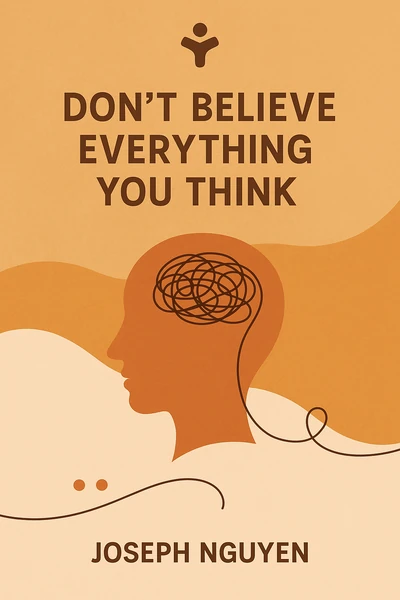
Don't Believe Everything You Think: Why Your Thinking Is The Beginning & End Of Suffering (Beyond Suffering Book 1)
Ready to Take Action?
Get the Mentorist app and turn insights like these into daily habits.