His girlfriend's answer never had a reason, and that changed everything
Joseph Nguyen has always been the kind of person who needs a reason for everything. So naturally, about a year into dating his girlfriend Makenna, he asked her why she loved him. She said she didn't know, she just knew that she did. He, in turn, rattled off a long list: her smile, her laugh, how she treated her family, how intelligent she was, on and on. He asked her the question again every few months for years, and her answer never changed. Six years in, she still says the same thing: she doesn't know, she just knows she loves him, a lot.
For a long time this bothered him. He could produce fifty reasons for his love; she couldn't produce a handful for hers. It wasn't until recently that he had the insight that flipped the whole thing. He started interrogating his own list. Did he love her because of her laugh, or because she liked helping people? What happens on a day she doesn't laugh, or doesn't help anyone? If those things are the reason, then the love is only there when the reasons are present, and gone when they're not. That, he realized, is not really love at all; it's a transaction with a very generous interest rate.
Makenna's inability to list reasons wasn't a gap in her love. It was the absence of conditions on it. She wasn't loving him because of what he did or how he behaved that day; the love was simply there, independent of performance, an overflow rather than a payment for services rendered.
Nguyen argues that this unconditional love isn't unique to one relationship; he describes it as something we're all already connected to at a deeper level, and the only thing that blocks it is our own thinking, which insists on attaching reasons, conditions, and expectations to what would otherwise flow freely. Once you set conditions for when you'll love someone, you've also, without meaning to, set the conditions for when you won't. The alternative he arrived at with Makenna wasn't to stop noticing her good qualities, but to stop making his love depend on them.
Start by writing down the reasons you tell yourself for loving someone close to you, and then ask honestly what would happen to that love if the specific trait behind each reason disappeared tomorrow. Pay attention over the next few days to moments when your warmth toward that person visibly rises or falls with what they do, and simply notice it without judgment. Try doing one small thing for them with no expectation of being thanked, remembered, or repaid, purely because you want to. And the next time someone asks why you love them, see what it feels like to say you don't fully know, you just do, instead of reaching for the usual list.
What You'll Achieve
You begin separating the qualities you admire in someone from the conditions you've quietly attached to loving them, so your affection stops rising and falling with their performance. People close to you may notice you're steadier and less reactive to their moods or mistakes.
Steps to make your love unconditional
List your reasons, then question them
Write down every reason you tell yourself for why you love someone, then ask what would happen to your love if that specific trait disappeared tomorrow.
Notice when love feels contingent
Pay attention to moments when your warmth toward someone visibly rises or falls with their behavior, and name that pattern as conditional love rather than treating it as simply how love works.
Practice giving without a return in mind
Do one small thing for someone close to you with no expectation that it will be reciprocated, remembered, or even noticed, purely because you want to give it.
Sit with not knowing why
The next time someone asks why you love them, resist the urge to produce a list. Notice what it feels like to simply say you don't fully know, you just do.
Reflection Questions
- If you listed every reason you love someone, what would happen to your love if each reason vanished one by one?
- Can you recall a moment your affection for someone clearly dipped because of something they did, and what that reveals about the conditions attached?
- What would it feel like to give something to someone you care about with genuinely no expectation of anything back?
Personalization Tips
- A parent who catches themselves praising a child more on days the child performs well can use this to notice conditional love creeping into an otherwise unconditional relationship.
- A friend who quietly recalculates how close they feel to someone the moment that person disagrees with them politically is watching reasons attach conditions to their affection.
- Someone who volunteers their time and finds it more satisfying when no one is watching or thanking them is glimpsing what unconditional giving actually feels like.
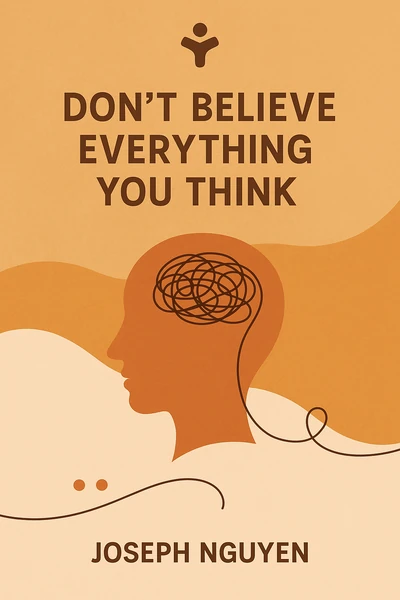
Don't Believe Everything You Think: Why Your Thinking Is The Beginning & End Of Suffering (Beyond Suffering Book 1)
Ready to Take Action?
Get the Mentorist app and turn insights like these into daily habits.