Replace online connection with real conversation to deepen relationships
A product team was drowning in pings. They were “connected” all day—hearts, emojis, short threads—but projects slipped and tension rose. The manager ran a two‑week trial: likes and reactive comments were off‑limits, texting was consolidated to two windows, and they held 15‑minute daily huddles plus one weekly one‑on‑one block. The first days felt awkward. Phones buzzed on desks, ignored. By day five, conversations got sharper and kinder.
One micro‑moment stood out. Two engineers had been sparring in chat for weeks. In their first scheduled one‑on‑one, they solved the issue in twelve minutes, laughed about a misunderstanding, and mapped the next sprint. They left with energy instead of simmering resentment. You could hear the espresso machine hiss in the background as they wrapped up.
On the personal side, a client stopped liking her best friend’s posts and called her during a standing Saturday walk. The first call felt rusty. The second flew by. By the fourth, they’d planned a joint trip they’d been postponing for years. “Honestly, I didn’t know how lonely I was until we started talking again,” she said. I might be wrong, but low‑signal nudges often keep us from noticing that ache.
Social science supports the shift. Face‑to‑face and voice conversations carry rich analog cues—tone, pace, facial expression—that our brains evolved to parse. These cues build empathy and trust. Text and likes are low bandwidth. Used as logistics, they help. Used as the relationship, they thin out bonds. Structure makes better conversations happen more often without costing more time.
Quit likes and quick comment habits now and reclaim that time for real contact. Put your phone on Do Not Disturb by default and check messages in two to four windows, offering a quick call if a thread needs clarity. Pick predictable office hours for conversations—a commute slot, a weekly coffee—and tell your people so they know when to reach you. Keep using digital tools to set up the call or the coffee, then close them and show up. Try your first call during your next commute.
What You'll Achieve
Internally, feel less lonely and more understood by restoring richer social cues. Externally, reduce message churn, resolve conflicts faster, and strengthen key relationships through predictable conversations.
Stop likes, start conversations this week
Eliminate low‑signal nudges
Stop clicking like and posting short comments. These signals feel social but don’t build closeness and they crowd out higher‑value contact.
Consolidate texting into sessions
Keep your phone on Do Not Disturb by default and check messages 2–4 set times daily. Offer calls during those windows if a thread needs nuance.
Set conversation office hours
Choose reliable times you’re always available for calls or coffee (e.g., weekday 5:30 p.m. commute, Saturday morning café). Tell friends and family.
Use tools to arrange, not replace
Let social apps or texts coordinate in‑person hangouts or calls, then log off. Treat digital as logistics, not the relationship itself.
Reflection Questions
- Which relationships deserve a weekly call or standing coffee?
- What time today can be my first conversation office hour?
- Which notification or like habit keeps me from deeper contact?
- What message windows make sense for my work and home rhythm?
Personalization Tips
- [Relationships] A sibling stops reacting to posts and instead calls every Sunday at 7 p.m. while making dinner.
- [Teams] A lead replaces Slack debates with a daily 15‑minute huddle and a weekly one‑on‑one call block.
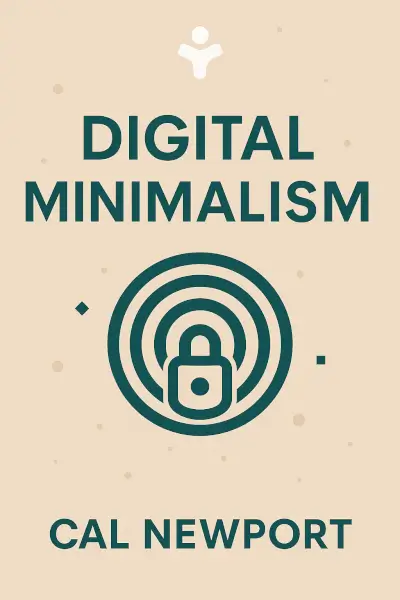
Digital Minimalism: Choosing a Focused Life in a Noisy World
Ready to Take Action?
Get the Mentorist app and turn insights like these into daily habits.