Challenge every assumption by arguing against your own case
In your mind, it’s natural to champion your favorite option, but have you ever wondered how it might fall apart? Picture this: you’ve decided to overhaul your home’s lighting to save energy. You’re sure it’s a brilliant plan. Then, the ‘devil’s advocate’ you adopted pipes up: “What if the new fixtures cost more to install than you save? What if the wiring isn’t compatible? What if downstairs guests trip over dim passages?” Suddenly, you sense those uneasy gnawing doubts you’d ignored. By actively arguing against your own case—listing three reasons your plan could fail—you’ve given those objections a voice rather than burying them. You breathe through the discomfort, noticing how your pulse calms when you jot down practical fixes. That gentle shift, from uncritical cheerleading to balanced scrutiny, makes all your decisions sturdier. It taps into decades of research on the confirmation bias, showing that generating counterarguments is one of the most reliable ways to protect yourself from self-delusion.
Next time you feel certain you’ve discovered the best path, assign one minute to list why it might flop. Invite a colleague to play devil’s advocate on the spot. Jot those objections on sticky notes and attach a one-line response to each—‘Test X first,’ ‘Check compatibility,’ or ‘Budget a 10% overrun.’ By turning your choice into a mini-debate, you’ll calm anxiety and bullet-proof your plans. Try it before your next big call.
What You'll Achieve
You’ll reduce bias by surfacing and addressing hidden objections early, leading to more robust, confidence-backed decisions. Internally, you’ll feel less anxious; externally, you’ll catch fatal flaws before they derail outcomes.
Play both hero and critic on decisions
Adopt the ‘devil’s advocate’ role
Formally appoint yourself or a teammate to argue the opposite side of your proposal. Encourage genuine, tough objections—this isn’t for debate points but for surfacing hidden holes.
Ask ‘why am I wrong?’
Pause before deciding and write a quick list of three reasons your favorite option could fail. This tangibly shifts you to consider disconfirming evidence.
Conduct a premortem exercise
Imagine 12 months from now your project has collapsed. In five minutes, list every cause you can think of. Rank the top two threats and draft micro-actions to prevent them.
Question your top expert
If you’ve consulted an authority, ask them not for predictions but for base rates: “In similar cases, how often does X occur?” This stops you from depending on one big forecast.
Reflection Questions
- What’s a decision you made without ever playing the critic?
- How did ignoring counterarguments cost you?
- Who could you trust to be your devil’s advocate right now?
Personalization Tips
- When pitching a new process, assign a colleague to argue why it won’t work—that way you spot gaps early.
- If you’re choosing a college, pretend you must convince a skeptic, forcing you to address counterarguments.
- Before a major purchase, list three scenarios where it could sour; then call a salesperson and ask how often each happens.
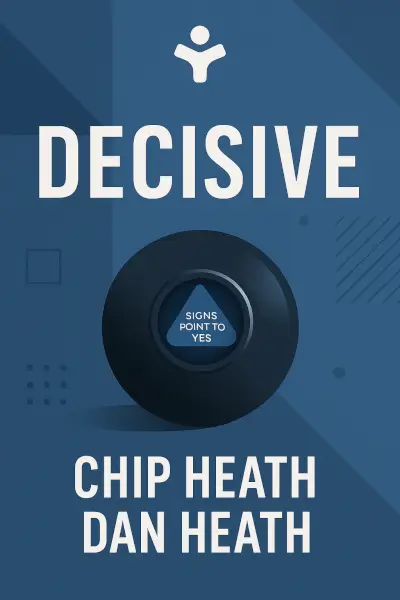
Decisive: How to Make Better Choices in Life and Work
Ready to Take Action?
Get the Mentorist app and turn insights like these into daily habits.