Expand your decision net to find paths you never imagined
In a midsize advertising agency, account director Maya faced a dilemma: Should she accept a promotion that demanded long hours at the office, or maintain her current title that allowed her to coach her daughter’s soccer team on weekends? She found herself replaying pros and cons in her head, feeling torn and frustrated by the lack of a clear answer. One morning, after a sleepless night, she forced herself to list the two options on a whiteboard in her home office. Her eyes fell on the empty space beside them, and she realized she hadn’t considered the possibility of job sharing: Could she split the new role with a colleague and alternate weeks? Inspired, she picked up the phone and pitched the idea to her boss. He paused, then agreed it could boost team morale and learning by having two perspectives.
Suddenly Maya’s indecision vanished. She and her colleague mapped out how a job-share schedule would work, ensuring project continuity. The agency rolled out the plan as a pilot, and not only did Maya gain leadership experience without missing every Saturday game, but the agency discovered it had unlocked talent in her partner as well. By expanding her mental net beyond “Option A or Option B,” Maya uncovered a win-win solution. This shift in mindset reflects the principle of widening your options—recognizing that challenging your frame often reveals solutions you didn’t know you were missing.
When you’re stuck between two choices, begin by writing down those default options so you can see how your mental spotlight is shining. Then deliberately banish them for a moment—ask what you’d do if neither option existed—and brainstorm that third choice. Pick one fresh idea and test it out or sketch how it could work in your real situation. Finally, share your sketch with someone outside the dilemma for a quick sense-check. Give it a try today.
What You'll Achieve
You’ll break out of limiting ‘either/or’ traps and uncover innovative third options you never imagined, boosting confidence and reducing regret. Externally, you’ll discover new solutions that could lead to smoother negotiations, happier families, or more successful projects.
Shake out your routine options today
List your default choices
Write down the two options you immediately think of when facing a decision (for example, “take the new job” or “stay put”). Seeing them on paper makes your mental spotlight visible.
Force a new alternative
Ask yourself, “What if I could do both?” or “What else is possible?” Push until you find a third option that isn’t just a copy of the first two.
Simulate vanishing options
Pretend your top picks no longer exist. Now ask, “What would I consider instead?” Often the best ideas emerge when you eliminate your first thoughts.
Explore one extra person’s view
Call a friend who has no stake in your decision. Ask them to brainstorm possibilities you haven’t yet considered, then note any fresh ideas.
Reflection Questions
- When did you last feel boxed in by only two options?
- What is a third alternative that seems crazy but might actually work?
- How can you enlist someone else to spot possibilities you’re overlooking?
Personalization Tips
- At work, instead of just “keep my current role” or “pursue management,” ask, “How could I shift laterally to learn a new domain?”
- At home, if you’re torn between moving cities or staying, consider “Could I do a three-month trial relocation?”
- When choosing a fitness routine, ask, “Could I combine cycling AND yoga instead of picking one?”
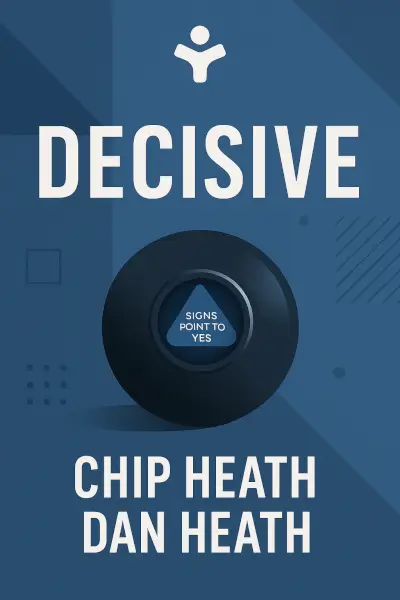
Decisive: How to Make Better Choices in Life and Work
Ready to Take Action?
Get the Mentorist app and turn insights like these into daily habits.