Fail Fast to Find Better Paths
When Ryan first arrived at his new marketing role, his idea for a viral video seemed foolproof. But after weeks of planning and rewrites, his confidence faded—no one was bubbling with excitement. Faced with a deadline, Ryan decided to shift tactics: he’d stop tweaking the script and launch a two-hour sprint to shoot a rough version using his phone and coworkers as on-screen cast.
By the end of that afternoon, he had a playful, raw two-minute clip that captured the concept’s essence. He posted it privately to a small group of colleagues. Within minutes, feedback poured in: tweak the opening hook, tighten the pacing, add a final surprising twist. They didn’t care about flawless editing—they saw the story’s spark.
Ryan spent another afternoon refining those few notes and posted Version 2. Suddenly, his pitch wasn’t just an abstract plan—it was real, engaging, and clearly on the right track. The momentum rallied the entire team, and marketers, designers, and salespeople began suggesting further enhancements. In less than a week, they had a video that everyone believed in.
Failing fast, or rather trying early and often, led Ryan to discover what worked and what didn’t before pouring resources into a full launch. By treating each iteration as an experiment—where mistakes were data rather than disasters—he found the right path in days, not months.
Science shows that rapid experimentation deepens learning and helps teams converge on solutions faster. By breaking down big risks into bite-sized tests, you reduce wasted effort and accelerate innovation.
Next time you hit a roadblock, stop drafting in circles—name the one uncertainty holding you back, sketch a quick test, and run it in under two days. Then gather a small feedback group and ask what works and what fails. Use their insights to refine or pivot. By treating each attempt as a data point rather than a nail-yourself-to-the-wall trial, you’ll zero in on winning ideas faster and save weeks of wasted effort—give it a whirl tomorrow morning.
What You'll Achieve
You’ll shift from fearful indecision to confident experimentation, slashing wasted effort, uncovering promising directions faster, and doubling your pace of discovery.
Script Quick Experiments
Identify the core uncertainty.
Pinpoint the single assumption or problem keeping your project from moving forward—no more. Write it down as a question.
Define a small test.
Decide on the simplest, fastest way to explore that question. Aim for 24–48 hours of work with minimal expense.
Run the test quickly.
Gather a small group, complete your prototype or mock-up, and capture results in a short presentation.
Review with peers.
Invite colleagues to watch your prototype and give candid “Braintrust”-style feedback focused on what works and what doesn’t.
Iterate or pivot.
Decide whether to refine your idea, take it in a new direction, or shelve it—and start the next experiment.
Reflection Questions
- What is the biggest assumption you can test this week?
- How could you design a 24-hour experiment around that assumption?
- Who can help you review preliminary results and suggest improvements?
Personalization Tips
- In software: build a simple prototype before writing full code.
- In dieting: try a one-day meal plan before committing to a new routine.
- In writing: draft a short story outline before launching into a full novel.
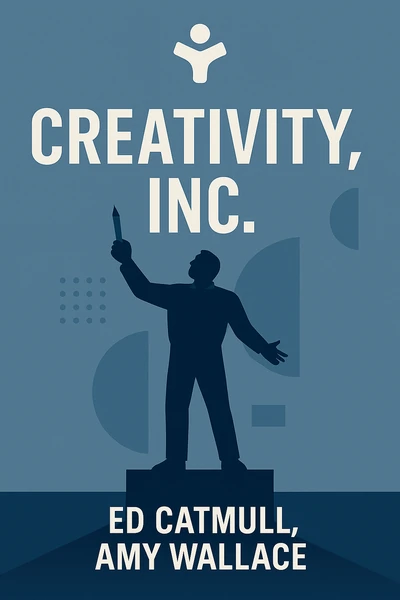
Creativity, Inc.: Overcoming the Unseen Forces That Stand in the Way of True Inspiration
Ready to Take Action?
Get the Mentorist app and turn insights like these into daily habits.