Read Body Language to Avoid Sending Mixed Signals
Patrick King stepped into a crowded seminar room for a workshop on nonverbal cues. The click of the presenter’s slide deck echoed softly overhead while he settled into his seat. As the speaker began, Patrick noticed several participants slouching, arms folded tightly across their chests. Even before a word was spoken, he sensed discomfort radiating from that corner.
Curious, he quietly shifted his posture to mirror the seated attendees near him—leaning back, uncrossing his arms, and offering a gentle nod. Almost immediately, the cross-armed cluster began to unlock: shoulders relaxed, arms unfolded, and occasional smiles flickered across faces. Patrick realized in that micro-moment how his own body language served as an unspoken invitation, transforming a rigid group into an engaged audience.
Later that evening, Patrick reviewed a recording of his own talk and was struck by how often he tapped his foot offstage or let his jaw drop when surprised by audience questions. It hit him that effective communication is more than the words we choose—it’s the harmony of voice, gesture, and expression. Mixed signals undermine clarity, but when every channel aligns, trust builds effortlessly.
Begin by observing someone in conversation and noting their posture: are their arms open or crossed? If you spot defensiveness, nod and uncross your own arms to reduce tension. Watch for lean-in cues or nodding—when they appear, ask a follow-up; when they lean back, give them space. Try mirroring small gestures like head tilts to deepen rapport. Finally, record yourself speaking for two minutes and review the footage to identify any mixed signals you might be sending. Practicing this will sharpen your nonverbal radar.
What You'll Achieve
You will become more attuned to others’ unspoken signals and synchronize your own body language, resulting in clearer, more trustworthy interactions and reduced misunderstandings.
Observe and Reflect on Nonverbals
Scan for open posture
Notice if someone’s arms remain uncrossed and feet face toward you—signs they feel engaged and receptive.
Catch arm crossings
When you see crossed arms, gently invite input or nod to ease tension, signaling you’re on their side.
Watch lean and nod patterns
If they lean in and nod, they’re fully invested—follow up closely; if they lean back, give them space or shift the topic.
Mirror subtle gestures
Reflect small motions—like head tilts or hand movements—to foster rapport and mutual understanding.
Audit your own signals
Record a short video of yourself in conversation, then review for crossed arms, gaze avoidance, or inconsistent expressions.
Reflection Questions
- What nonverbal cues do you most frequently notice in others and how do they affect your reactions?
- In what situations have your own body signals undermined your spoken message?
- How can you practice mirroring gestures to build rapport without seeming insincere?
Personalization Tips
- At home you notice your teen son leaning away while you share advice, so you pause and ask if they’d prefer space.
- In a one-on-one meeting you see a colleague nodding vigorously and lean slightly forward to meet their energy.
- During a study group you tap your pen to signal excitement when others point at a whiteboard diagram.
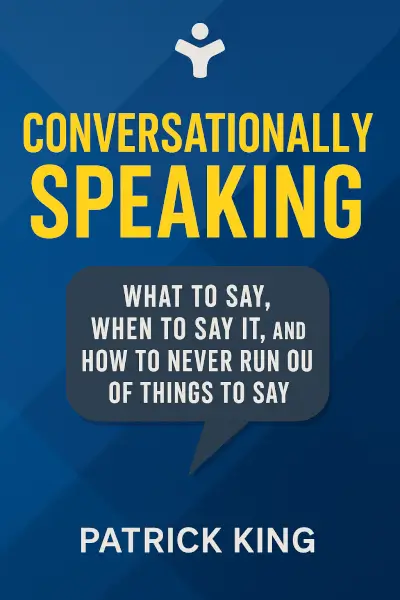
Conversationally Speaking: WHAT to Say, WHEN to Say It, and HOW to Never Run Out of Things to Say
Ready to Take Action?
Get the Mentorist app and turn insights like these into daily habits.