Master indirect openers to break the ice with ease
Imagine walking into a busy lobby at a conference where everyone’s faces seem fixed on their phones. You want to chat, but the thought of barging in feels awkward. Instead of blurting “Hi, I’m new here,” you ask, “Excuse me, do you know where the registration desk moved?” The stranger looks up, relieved—they have an answer, you have a reason, and ice is broken.
That moment illustrates indirect openers at work: asking for objective information, offering an observation, or pointing out a shared connection. By requesting a fact—time, location, opinion—you remove the stigma of intrusion. If no one replies, you’re not intrusive; you simply needed directions. If they do, you transition smoothly into small talk.
These tactics draw on the pragmatic psychology of plausible deniability. It silences self-judgment (“What if they think I’m weird?”) because you’re pursuing useful information. At the same time, it appeals to people’s natural desire to help and share opinions. The exchange feels purposeful, not forced.
Over time, these subtle deft moves become muscle memory. You’ll find yourself warming up social conversations with minimal internal friction. By framing your approach through indirect openers, you’ll steadily build rapport and leave awkwardness behind.
Start by selecting one indirect method—ask for a fact or opinion, share a brief observation, or point out common ground. Then watch how people naturally respond. If they reply, follow up with a simple question. If not, you’ve still gained value from the information. Practice this once daily in low-stakes settings and notice how easily conversation flows over time.
What You'll Achieve
You will reliably break the ice without anxiety, creating more comfortable openings and boosting your frequency of positive social interactions.
Employ subtle conversation starters daily
Ask objective or opinion questions
Pose queries like “Do you know when the event starts?” for facts or “What was your favorite part of the keynote?” for opinions to justify your approach.
Make environment observations
Share a comment—“This lighting is fantastic”—so others can choose to engage without pressure.
Highlight shared context
Note common ground: “How do you know our host?” or “Which session are you most excited about?” to invite response.
Reflection Questions
- Which indirect opener will you use first?
- How might your body language support that question?
- What reaction will signal you to deepen the exchange?
Personalization Tips
- In a meeting, begin with “What did you think of that last slide?”
- At a concert, say “These vocals give me chills, don’t they?”
- On a campus tour, ask “Have you tried the coffee in that new café?”
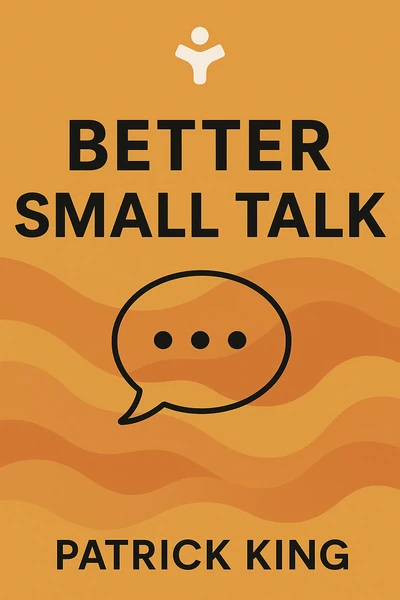
Better Small Talk: Talk to Anyone, Avoid Awkwardness, Generate Deep Conversations, and Make Real Friends (How to be More Likable and Charismatic Book 6)
Ready to Take Action?
Get the Mentorist app and turn insights like these into daily habits.