Why the ‘Me First’ Mindset Costs You as a New Boss
You step into Monday’s meeting with a heavy heart—your coffee’s gone cold, and the buzz of your phone feels like an accusation. As you speak, your team’s eyes drift to their screens. You can’t shake the thought that every update starts with “I” and “my,” until you remember the moment you were brought in for that promotion. It was your track record as a solo star, and yet here you are, realizing that what made you shine now isolates you from the people who matter.
Last week, Anna missed her slide deadline, and instead of asking why, you pointed out how your own process could have been faster. Hearing yourself say, “I’d never miss a detail like that,” triggered a silence that filled the room. You might be wrong, but science tells us that an individual-contributor script anchored to “me” creates distance. Identity theory suggests that shifting from an “I” to a “we” mindset rewires your role from performer to collaborator, instantly boosting group morale and cohesion.
Today, you decide to try something different. You start by saying, “We hit 70% of our target last week—great effort, team.” You lean forward, make eye contact, and invite Emma to share her ideas on the next milestone. Her face lights up. In that moment, you feel connection. You’re no longer the solo act; you’re the conductor of a symphony. Leadership research proves that collective focus—flipping your script from “It’s about me” to “It’s about us”—drives engagement, trust, and performance.
You begin by identifying your team’s top three goals and writing them on a whiteboard so everyone can see and own them. Next, you deliberately celebrate a colleague’s win each morning—be it a quick shout-out or a high-five—to move the spotlight off yourself. You swap every “I” with “we” when talking about progress to reinforce unity. Finally, you end each meeting by naming specific team members whose efforts made success possible. Give it a try tonight.
What You'll Achieve
By shifting from self-centered to collective focus, you will build stronger relationships and a sense of shared purpose, leading to higher team engagement, clearer accountability, and sustainable performance.
Shift focus to team wins
Identify team goals
Write down the top three objectives your group must hit this quarter. Place them where everyone sees them so your focus shifts from individual tasks to collective outcomes.
Celebrate others’ successes
Each morning, highlight one colleague’s win over email or in a quick huddle. Use specific praise to move the spotlight off yourself and onto the team.
Swap pronouns
Consciously replace every “I” with “we” in status updates and presentations. This simple language shift rewires your mindset from solo performer to collaborative leader.
Delegate credit
At the end of each meeting, name at least one person whose work made progress possible. Linking outcomes to individual contributions builds shared ownership.
Reflection Questions
- When was the last time you heard yourself say “I” more than “we”? What did that feel like for the team?
- Which teammate’s effort have you overlooked? How can you highlight their contribution this week?
- What small language change could you make tomorrow to reinforce a ‘we’ mindset?
Personalization Tips
- At a town-hall presentation, open with “Our department achieved these milestones…” to show unified effort.
- In a fitness group, lead by saying “We ran five miles today,” reinforcing collective motivation.
- When planning a family meal, start with “We’ll set the table together,” making chores a shared activity.
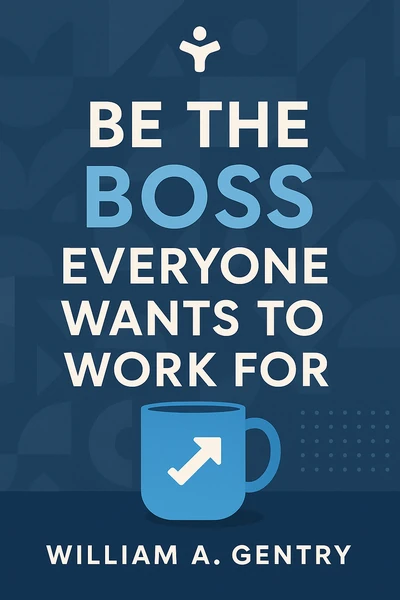
Be the Boss Everyone Wants to Work for: A Guide for New Leaders
Ready to Take Action?
Get the Mentorist app and turn insights like these into daily habits.