Why Easy Memories and Vivid Examples Distort Your Risk Judgment
We’re built to notice the events that stand out: the plane crash on TV, the celebrity scandal, the rare but shocking crime in our neighborhood. It’s only natural—memorable stories are easier to recall than facts or dull statistics. But this ‘availability bias’ means that we systematically overestimate the frequency and size of dramatic risks while missing the dangers (or opportunities) that never get press or gossip attention. As a result, people stockpile supplies after storms that rarely repeat, buy insurance they don’t need, or overlook invisible risks that never make headlines.
Research shows that people’s beliefs about risk are shaped less by real odds than by whatever is easiest to call to mind. If there’s been no recent flood, no one worries about high water; if one neighbor gets robbed, suddenly safety is everyone’s top concern. This makes sense for ancient humans on the savannah, but it often leads us astray in the complex modern world.
To correct for availability bias, you have to build a simple habit: check your gut feelings against data, and remind yourself that what’s easiest to remember is rarely the best guide to what will actually happen. Otherwise, important but quiet risks will be ignored, and loud, rare ones will get all your attention.
The next time a scary news story or dramatic example starts to shape your choices, pause and ask yourself if your worry (or confidence) matches actual odds, or just what you’ve noticed lately. Make it a rule to consult more than one source—maybe look up a statistic, ask an expert, or check a different news outlet—before letting risk fears dictate your actions. Keep a short diary of close calls or unnoticed successes, so you learn to spot invisible trends, not just the stories everyone’s talking about. With time, this practice will steady your nerves, help you allocate energy to the right risks, and make sure you don’t let memory tricks steal your peace of mind.
What You'll Achieve
Develop more accurate risk perceptions, reduce unnecessary worry, and make safer or smarter choices by recognizing the hidden influence of memory and attention on your fears.
Balance Choices by Investigating Unseen Risks
Ask whether the frequency in your memory matches reality.
Notice if your worry or optimism about an event (like accidents or illnesses) is based on a recent story or vivid example, rather than actual odds.
Consult at least two sources before making big decisions involving risk.
Don’t rely only on media reports, personal stories, or what you just heard from friends—look for statistics, expert opinions, or past data.
Keep a simple diary of 'almost happened' events.
Write down situations where something nearly went wrong (or surprisingly well) but didn’t get reported widely—this builds awareness of hidden risks.
Reflection Questions
- What risks do I worry about most, and are they statistically likely?
- When did I last overreact (or underreact) based on a story or rumor?
- How can I build a habit of consulting reliable data before making a risky choice?
- What invisible risks am I ignoring by focusing on vivid events?
Personalization Tips
- After hearing about a local burglary on the news, check actual crime rates in your area before feeling scared.
- When evaluating whether to get a flu vaccine, look up last year’s illness statistics instead of just listening to a friend’s story.
- Before deciding not to wear a helmet after seeing others without one, search for data on injury rates, not just your personal experiences.
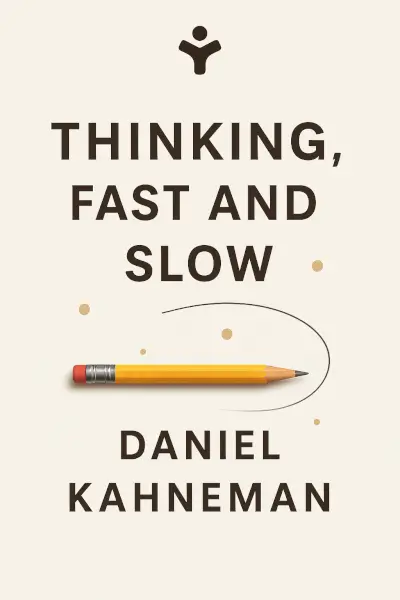
Thinking, Fast and Slow
Ready to Take Action?
Get the Mentorist app and turn insights like these into daily habits.