Why Your Brain Wants to Believe Everything It Sees—and How to Dodge Cognitive Illusions
People love to believe their eyes, their memories, and even their hunches. Yet, surprisingly, many of our mental shortcuts—called cognitive illusions—are just as misleading as an optical illusion. Take the famous Müller-Lyer illusion: when two horizontal lines with different angled fins appear to be different lengths, even though they are actually identical, your brain can't help but see the bottom line as longer. Measuring with a ruler doesn't change how you see it—it just lets you know your eyes are fooling you.
But not all illusions involve sight. Your thoughts, intuitions, and confidence can be just as easily tricked. When you hear a catchy phrase or see a simple headline printed in bright, clear text, you're more likely to believe it—even if it's false. Repetition, clear design, and emotionally charged stories don't make facts any more true, but your mind feels more comfortable ('cognitive ease'), so you’re much less critical than you’d think.
The tricky part is, we rarely realize when we're falling for these illusions. We’re naturally certain about what we see or feel, and we trust familiar stories. It takes real effort to slow down and ask, 'Could there be missing facts? Is there another explanation?' It's not always fun to challenge your comfort, but doing so means you’ll make smarter, more reliable decisions in every area of life.
Next time a social post or rumor grabs your attention, take a breath before you buy into it. Notice if you feel especially comfortable or certain—maybe it’s the bright colors, clear font, or a story you’ve heard before influencing you, not just the truth. Make it a point to check at least one other source or ask someone for a second opinion when you feel extra sure about something. This small habit not only helps you avoid falling for illusions, but it also builds your confidence in seeking the truth—even when everyone else just believes what they see. Try this in conversations, online shopping, or even when you’re asked to believe a statistic in class. Over time, it’s a game changer.
What You'll Achieve
Strengthen ability to spot mental blind spots, become less influenced by surface-level cues, and build a habit of verifying information rather than blindly accepting it.
Spot and Overcome Mental Blind Spots in Everyday Life
Actively question surprising information before believing it.
Next time you see a viral story, a statistic, or gossip that seems incredible, challenge yourself to look for other explanations or missing details before accepting it as true.
Notice when you feel especially certain or comfortable.
Certainty is often a sign of 'cognitive ease,' which can be triggered by repetition, clear fonts, or simple language. Write down moments when things feel 'obviously true' and check for possible illusions.
Seek out alternative viewpoints or contradictory evidence.
Make it a habit to consult at least one other source or ask someone else for their perspective when you feel very sure about a judgment or belief.
Reflection Questions
- Where in my life am I most easily fooled by appearances or repetition?
- How do I feel when I realize I've believed something untrue?
- What makes it hard to challenge my own beliefs?
- Who can I turn to for a reliable second opinion?
Personalization Tips
- If an Instagram ad uses a catchy rhyme or bright colors, ask yourself if you’re believing its claims just because it’s smooth or memorable.
- When school rumors seem oddly believable, consider whether you’ve heard them repeated often or only from one person.
- If you feel anger after reading a news headline, check if the story is written to play on emotions or if key facts might be missing.
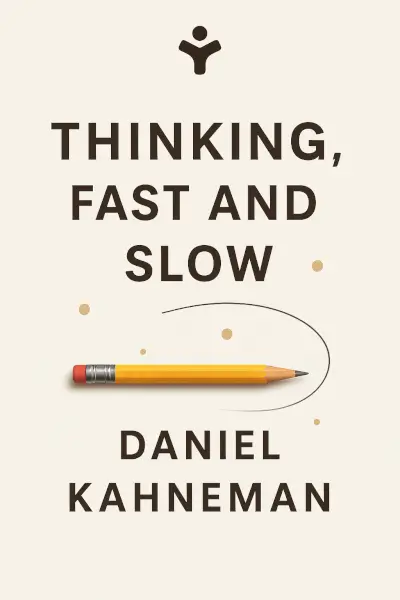
Thinking, Fast and Slow
Ready to Take Action?
Get the Mentorist app and turn insights like these into daily habits.