How Fast Thinking Tricks You—and What to Do About It
You’re walking through the crowded school hallway, scanning for familiar faces. As you pass Mia, her eyes dart away and she doesn’t smile. Instantly, your gut tells you, 'She must be mad at me.' But then, as your phone buzzes and you glance at Mia a second later, you notice she’s biting her lip and holding a thick packet of tests—probably worried about the exam she’s about to grade, not annoyed at you. Still, that initial jolt of worry lingers for hours, shadowing your mood until lunch.
This pattern repeats itself. You breeze through homework questions that look familiar, picking the first answer that feels right, only to realize later you missed a subtle twist in the instructions. Or maybe you click 'like' on a social media post because the picture looks soothing, not really reading the content. Each time, your quick, automatic reactions—what scientists call 'System 1'—are behind the wheel.
When you slow down and consciously ask whether your first impression or answer really fits the situation, you often catch errors or learn something surprising about your own habits. Scientists have shown that the faster, easier style of thinking is perfect for scanning for danger or reading emotional cues—but it’s unreliable for logic or judgment in new situations. Noticing when System 1 is operating, and pausing long enough for careful thought, is a skill you can actually train—just like musicians practice scales or athletes run drills.
As you move through your day, start by simply noticing when your mind jumps to conclusions—did you assume why a friend didn’t text back, or feel sure about an answer on a quiz before reading every choice? In these moments, pause just a bit longer than usual. Write down the situations that trigger these automatic judgments, like reacting to someone’s facial expression or a headline. Whenever you catch one, quietly label it as 'System 1'—your fast-thinking system—at work. This habit builds self-awareness and gives you the power to decide when to trust your gut and when to slow down. Try this simple practice over the next week and see how your understanding, confidence, and patience start to shift, one decision at a time.
What You'll Achieve
Build greater self-awareness of your thinking patterns, reduce snap judgments, strengthen deliberate decision-making, and improve relationships by slowing down before reacting.
Train Your Brain to Notice Automatic Responses
Pause before acting on first impressions.
When you feel the urge to make a snap decision—like assuming someone’s mood based on their voice—take a short mental pause and check if your mind is jumping to conclusions.
Identify cues that trigger automatic judgments.
Write down situations where you often react instinctively, like scanning faces in the hallway or reading news headlines.
Practice labeling mental shortcuts as ‘System 1’ moments.
Whenever you catch yourself making an immediate judgment, say or think, 'That’s my fast thinking at work,' to build self-awareness.
Reflection Questions
- When was the last time a first impression turned out to be wrong?
- How does pausing before reacting change my mood or confidence?
- What situations most often trigger my snap judgments?
- How could I make it easier to remember to pause?
Personalization Tips
- In a group project, you might quickly label a quiet classmate as unmotivated; next time, pause and gather more information.
- While reading online, notice how your opinion of an article changes if the headline is bold or in an easy-to-read font.
- If you assume a coworker is upset because they look serious, pause and ask—not just rely on your first impression.
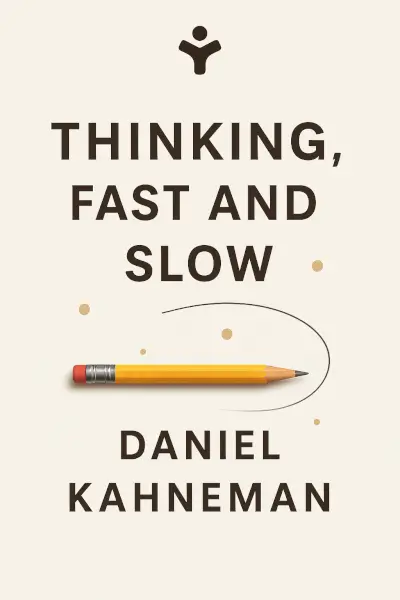
Thinking, Fast and Slow
Ready to Take Action?
Get the Mentorist app and turn insights like these into daily habits.