Rethinking Success: Why Winners Aren’t Always Talented and Failure is Often Invisible
It’s tempting to believe that success always rewards the best and the brightest—that every superstar actor, CEO, or scientist must have a unique edge. Behavioral science, however, finds that in fields driven by rare, Extreme events (Extremistan), success nearly always involves a hefty dose of luck, as much as or more than skill. For every ‘winner’ we see, there are hundreds who did almost the same things but failed due to timing, unnoticed obstacles, or plain randomness.
Worse, we only ever hear the stories of the survivors; the people who gave it their all and missed by a hair remain invisible. This creates a dangerous illusion: attributing every win to hard work or clever tactics, missing the sea of others who worked just as hard, made similar choices, and simply weren’t picked by luck. Whether in business, the arts, or school, real understanding comes by comparing the visible winners, the invisible losses, and asking what both have in common.
Learning from this insight doesn’t mean quitting or refusing to try. It means creating realistic expectations, preparing emotionally for both outcomes, and remembering that no single story explains it all.
Any time you’re tempted to copy a successful person or plan, pause and search for at least two stories of failure in the same field. Ask directly: ‘Did others try this exact formula and still fail?’ Learn from the details of unseen losses, adjust your risk-taking decisions accordingly, and remember that luck—good or bad—is always part of the game, especially in fields where only a handful can win.
What You'll Achieve
Promote humility, resilience, and realistic self-expectations, leading to more adaptive planning and healthier emotional responses to both success and failure.
Always Ask About the Missing Stories
Study both success and failure in your domain.
When researching top performers—athletes, entrepreneurs, scholars—separate out what is due to skill and what might be due to luck or survivor bias.
Actively seek accounts from those who failed.
Look for stories, interviews, or first-hand accounts from people who pursued your path but didn’t reach the top, and analyze what they did and didn’t do compared to those who succeeded.
Question lessons drawn from a single visible winner.
Whenever you’re inspired by a superstar’s habits, ask, 'Did others do the same but not succeed?' and adjust your learning accordingly.
Reflection Questions
- When have you only learned from a winner’s story and ignored all the rest?
- How can you seek out lessons from those who didn’t ‘make it’?
- What role has luck—positive or negative—played in your big life events?
- How will you measure your progress beyond just visible wins or losses?
Personalization Tips
- For job interviews, ask to speak with people who applied but weren’t selected to learn what the inside tips and pitfalls really are.
- In learning a craft or starting a business, read as many stories of businesses that quietly failed as of those that flourished.
- On sports teams, listen for the stories of talented players who never made the main lineup—and learn why.
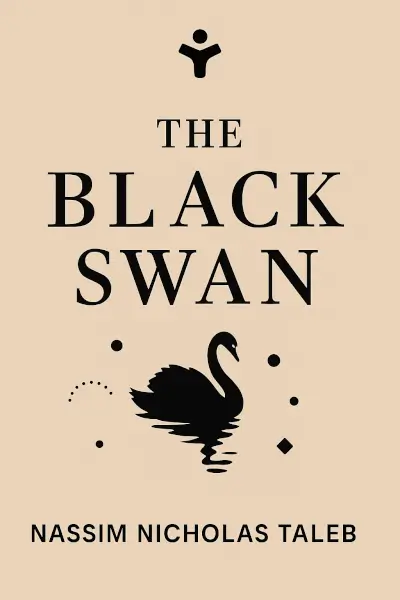
The Black Swan: The Impact of the Highly Improbable
Ready to Take Action?
Get the Mentorist app and turn insights like these into daily habits.