Avoiding the Sucker’s Trap—Why Most Risk Models Miss What Matters
People and organizations love to use models—spreadsheets, forecasts, or simulation tools—to tame the future. Yet as Black Swan events repeatedly show, disasters and breakthroughs usually come from sources that the model didn’t (and couldn’t) foresee. Banks, for example, use risk models that miss rare but devastating market crashes; medical tests may report ‘no evidence’ of disease, yet overlook silent risks off their radar. The lesson: any model is, at best, a map—a partial representation of the much messier, real world.
In schools, business, and even friendships, we tend to rely on formulas that work for average cases, yet fail to adjust for the few wild outcomes that matter most. Pretending otherwise is a recipe for 'sucker's risk'—where steady small gains lull you, but you’re unprepared for a loss that erases all progress. Behavioral science cautions us to focus less on fine-tuning predictions and more on engineering systems and plans that are resilient to the event no one saw coming.
The best way to break out of this trap is to always question which possibilities your model leaves out, put effort toward preparing for events that don’t fit, and invest more in building safety margins than in adding decimal places to forecasts.
Before you trust your favorite forecast, sit down and list out what it doesn’t capture, especially the rare or unseen events that could have a big effect. Imagine just one scenario your model misses, and think of a way—however small—to reduce risk or improve flexibility. Focus on making decisions that will keep you standing even if the worst (or the best) Black Swan lands on your doorstep. This habit isn’t about paranoia—just common sense when the world plays by rules much messier than any map.
What You'll Achieve
Increase your resilience, safeguard against avoidable disaster, and recognize where being prepared beats being precisely 'right' about the future.
Question All Models and Prepare for Extremes
Identify the limitations of your favorite models.
If you use any prediction tools—grade trends, business forecasts, health trackers—make a list of what they leave out or can’t measure (unexpected events, outliers, etc.).
Plan for scenarios your model excludes.
For each major plan, write a short paragraph about at least one 'impossible' scenario most models say can’t happen, and consider one practical way to guard against it.
Emphasize decision-making over believing in predictions.
Focus energy on putting up safety nets, building flexibility, or increasing your exposure to positive surprises—not just improving or tweaking the model.
Reflection Questions
- What is your favorite decision-making tool or model, and what does it leave out?
- How do you handle surprises that your plan or routine never anticipated?
- Have you ever been lulled into overconfidence by a model that mostly worked until it didn’t?
- What would your contingency plan look like if the ‘impossible’ happened?
Personalization Tips
- In business, question if your financial forecasts ignore big, rare market shocks.
- For health, recognize that fitness apps can’t always account for rare illnesses or injuries.
- In education, note that standardized tests will never predict the unique challenges of every student or class.
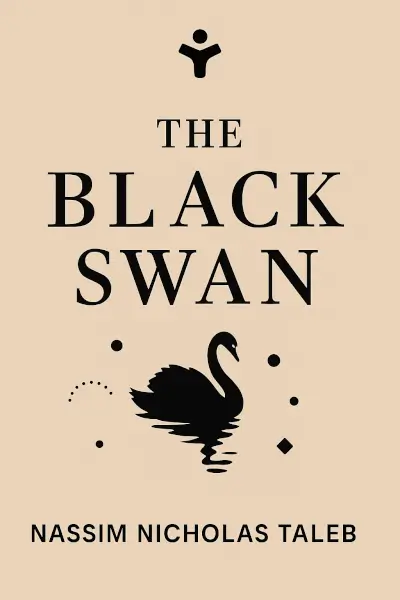
The Black Swan: The Impact of the Highly Improbable
Ready to Take Action?
Get the Mentorist app and turn insights like these into daily habits.