Escaping the Trap of Overconfidence—Why Most Experts Are Blind to What They Don’t Know
Research has repeatedly shown that people—especially those with the most education and expertise—grossly underestimate how little they know about the future. Classic experiments, like those run at Harvard Business School, ask students to set a range they'll bet has a 98% chance of including the right answer—such as the number of books in a library or the age of a historical figure. The actual error rate? Nearly 45%—more than 20 times higher than expected. It’s not just students; politicians, CEOs, and forecasters all display this ‘epistemic arrogance’.
This isn't simply about being bad at guessing; it’s about the human tendency to compress uncertainty, overrate personal knowledge, and ignore the big surprises just outside their field of vision. Studies across cultures, professions, and even among self-proclaimed ‘humble’ people find the same effect, though the worst offenders are often those tasked with making forecasts as their job. The real-world damage is easy to see: blown project deadlines, busted budgets, and teams caught off guard by market shifts or unexpected events they should’ve at least considered.
Behavioral science points to routine overconfidence as a central psychological bias. The solution isn’t just to ‘be more careful’—it’s to regularly test your predictions, measure error margins, and actually expect large, infrequent mistakes as part of the process. Testing, learning from error, and always padding for the unexpected creates resilience, whether you’re launching a project or just planning your week.
Next time you’re tempted to guess a test score or predict a project’s finish date, actually write down your range before looking up the answer. When you compare, notice how often you’re surprised—and use these lessons to build larger error margins into your plans. Ask for input from people with very different opinions and experience. Over time, you’ll grow comfortable with—not afraid of—acknowledging what you don’t know, which is the only way to consistently avoid nasty surprises.
What You'll Achieve
Strengthen your ability to make realistic plans, respond calmly to setbacks, and cultivate humility that makes you a genuinely better decision-maker and less vulnerable to overconfidence.
Test Your Forecasting and Accept Uncertainty
Estimate then record your prediction accuracy.
Pick three upcoming test scores, election results, or business sales numbers, make a range for what you think is highly likely, and write it down before you hear the results.
Compare results and reflect on over/underconfidence.
When the outcomes are known, check how often your predictions were outside your stated range and how big the errors were. Honestly note if you were too precise or overconfident.
Build margin for error into future plans.
Whenever making decisions, pad your expectations for time, budget, or difficulty based on the size of previous forecasting mistakes. Seek advice from dissenters rather than experts who think just like you.
Reflection Questions
- Which areas do you routinely overestimate your skill or knowledge in?
- How can you create regular feedback loops to check your forecasts?
- In what ways has overconfidence helped or hurt your decisions?
- Who can you enlist to challenge your assumptions before you commit to a major plan?
Personalization Tips
- After guessing your math grade, see if your actual result is inside or outside your expected range and track this over a semester.
- When planning a team event, add 20% buffer time to your timeline based on past estimation errors.
- If starting a new job, ask both a pessimist and an optimist how long it’ll take to ramp up, then average the two.
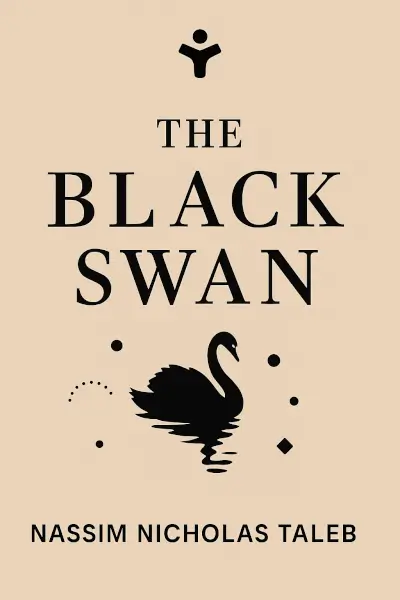
The Black Swan: The Impact of the Highly Improbable
Ready to Take Action?
Get the Mentorist app and turn insights like these into daily habits.