Rejecting Feminism Lite: Why Conditional Equality Is Not Enough
You hear it at work, in the news, even among friends: 'He allows his wife to work.' 'She shines because her husband supports her.' These statements sound positive but carry an invisible weight—they root power on one side and dress up permission as progress. For every story of a woman 'supported,' there are dozens where the real conversation about fairness is skipped. Why must equality be conditional, granted only if it doesn’t disturb comfort or status?
In a family discussion, someone says, 'It’s nice he lets her speak in public,' not noticing the hidden bias. You try to rephrase: 'They both support each other’s voices.' At work, you notice that a man’s authority is never 'allowed'; it simply is. Frustration bubbles, but each small correction seeds a shift in perspective. Over time, your own standards become sharper: you find yourself questioning half-measures and standing up for clear, balanced recognition.
Feminism Lite relies on benevolence or permission, rather than insisting on equality as a given. Social scientists warn that conditional equality keeps biases alive by making space for exceptions, double standards, or covert resistance to real change. Only demanding the real thing—across all settings—breaks cycles of status and subordination.
In the next few conversations at home or work, listen carefully for loaded phrases that suggest support is conditional or that one person’s progress depends on another’s blessing. Interrupt the cycle with a respectful challenge or a corrected statement, making equality your visible default rather than a reward. If you catch yourself using qualifying language, pause and reframe—from 'helping' to 'partnering,' from 'allowing' to 'embracing.' Notice not just the words but the way they reflect deeper beliefs, and challenge yourself to stand by full standards of respect and fairness. Start making those small changes right away.
What You'll Achieve
Stronger confidence in advocating for real equality, greater clarity in communication about power, and more consistent standards for respect in all relationships.
Cut Out Half-Measures and Weak Analogies
Refuse language of 'allowing' or 'supporting' in one-sided power dynamics.
Whenever you notice phrases like 'allowed to shine' or 'behind every great man,' confront the underlying assumption and restate it as mutual equality.
Insist on full, not partial, standards of respect and fairness.
Challenge situations where equality is offered only within set conditions or as a form of benevolence, not as a right.
Point out and question unconscious bias in your environment.
When confronted with discomfort about powerful women or double standards in leadership, ask directly why those same standards don’t apply to men.
Reflection Questions
- When have you accepted a half-measure of equality instead of pushing for more?
- How do popular media or workplace environments reinforce the idea of 'conditional support'?
- What are the risks of accepting conditional respect—how might you stand up for more?
- How does your language reflect your true beliefs about equality?
Personalization Tips
- During a meeting, you highlight when a woman is described as 'allowed' to lead.
- At home, you talk with kids or relatives when you hear roles described as 'men’s domain' or 'women’s domain'.
- A student brings up why praise is only given to women taking a visible role in group projects.
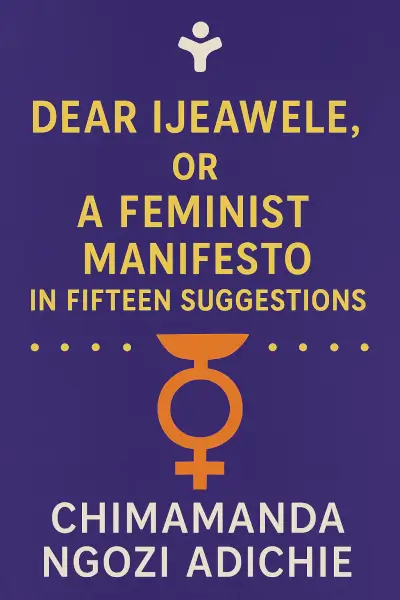
Dear Ijeawele, or A Feminist Manifesto in Fifteen Suggestions
Ready to Take Action?
Get the Mentorist app and turn insights like these into daily habits.