Delay Smartphone and Social Media Access—Protect Developing Brains from Digital Overload
When parents in a mid-sized school district noticed escalating rates of anxiety, distractions, and social friction, they banded together. They compared notes: some had already tried taking away social media, others had watched as rules dissolved into daily arguments. Eventually, they formed a coalition, swapping stories about what worked. One mom shared how her daughter thrived at a summer camp that prohibited phones altogether—after the initial protest, she appeared calmer and more cheerful. Another recounted how their family had managed to delay the smartphone handoff until high school, with surprisingly little social fallout when enough families agreed to do it together.
The turning point came when the district piloted phone-free schools, following mounting research that phones undermined focus and cooperation. Teachers noticed within a few months: classroom disruptions shrank, lunchtime conversations grew richer, and even shy students joined in more. The initial pushback gave way to a kind of collective relief. Administrators credited the clear, community-wide expectation for limiting 'device sneakiness' and fights over technology. What had felt impossible in isolation—a single family fighting the tide—became manageable through group action. Parents, educators, and students shared ownership for the shared goal: giving young brains breathing room to grow.
Behavioral science highlights that habit change is easiest when the environment, not just individual willpower, supports new norms. As more parents, teachers, and teens participated, the pressure to conform to all-day device use lessened. Small reforms, multiplied by a community, rewired what was considered 'normal'—allowing students to recover real focus and joy.
To protect tender developing minds, work with your family and community to delay the gift of a smartphone until at least age 14 or 15, leaning on basic phones if needed for safety or logistics. Agree up front that no solo social media accounts will be created before age 16, and explain to your teens the science behind this timeline—let them help plan alternative ways to stay in touch. If you’re part of a school, lend your support for policies that put devices away during the school day, pooling collective power to break the cycle of individual battles. Changing norms is easier together, and every family that signs on makes it simpler for the next.
What You'll Achieve
Reduce the risk of addiction, sleep problems, and mental distress by aligning technology access with healthy developmental milestones; enable clearer focus, more face-to-face connection, and less anxiety for teens.
Establish Clear Age Milestones for Digital Access
Hold off on smartphones until at least high school age.
Provide only basic phones capable of calls and limited texting for kids up to 14 (roughly grade 9).
Set 16 as the minimum for solo social media accounts.
Together with your family or school, agree that teens do not independently access platforms like Instagram, Snapchat, or TikTok before 16.
Advocate for or participate in phone-free schools.
Support locker or pouch systems—students store devices away for the entire school day, creating space for attention and in-person connection.
Reflection Questions
- What barriers do you anticipate if trying to delay smartphones or social media at home?
- How could you team up with other families or your school to make this approach stick?
- How might you explain these milestones to your child in a way that respects their viewpoint?
- What positive changes would you hope to see if device use was limited at school as well as at home?
Personalization Tips
- A parent buys a flip-phone for their 12-year-old so she can call for a ride, but waits until age 15 for a smartphone.
- A school community holds an informational meeting, then votes to require all devices be kept in lockers during class.
- Teens help co-create a classroom policy on digital access and get involved in enforcing it as a leadership project.
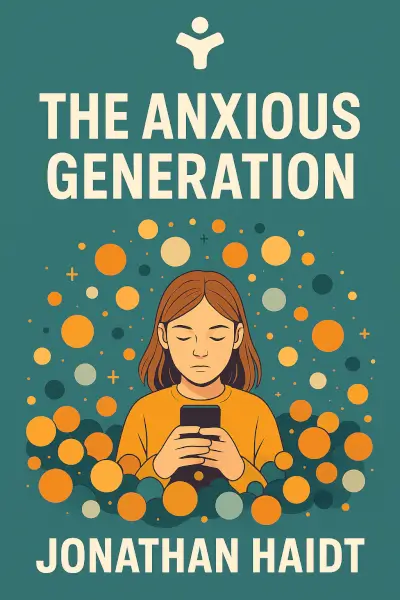
The Anxious Generation: How the Great Rewiring of Childhood Caused an Epidemic of Mental Illness
Ready to Take Action?
Get the Mentorist app and turn insights like these into daily habits.