Why Embracing Imperfection Is the Surprising Shortcut to Real Belonging
You stand in front of the bathroom mirror, replaying the moment you stumbled over your words in front of your classmates. Your cheeks flush remembering their brief silence, and you mentally scold yourself for not being perfect. Later, in the cafeteria, you hesitate to share the story, afraid your friends will see you as awkward. But when you finally admit it, something odd happens: instead of pulling away, one laughs, sharing her own slip-up from Spanish class, and another says, 'I panic all the time!'. The tension lifts, and you feel lighter, more seen. The next day, you notice you’re not the only one with untied shoelaces or a nervous stutter. In fact, your willingness to let your guard down brings others around you closer.
Evenings become easier. You catch the critical voice in your head and replace it with a kind, internal 'You're doing your best.' The same goes for your younger brother, who spills milk and looks up, fearful. You simply smile and help clean up, feeling the shift inside you—and between you. Instead of brewing resentment, your home fills with compassion and acceptance. Slowly, the need to prove you are 'good enough' fades, making room for laughter, honesty, and unpredictable moments that make connection real.
Behavioral science shows that perfectionism often leads to isolation and shame, while embracing imperfections fosters 'belonging cues'—signals of trust and safety that deepen relationships. Shame researcher Brené Brown describes belonging as the result of authenticity, not conformity. This insight is anchored in both neuroscience (social connection triggers reward centers in the brain) and developmental psychology: when we give up the exhausting chase for external approval, we become more resilient, adaptable, and confident in who we are.
Every time you catch yourself aiming to be flawless, pause and gently question that impulse—it's often fueled by a hidden fear of not being good enough. Instead, try offering yourself kindness just as you would to your best friend. Share a recent awkward moment with someone you trust and see how they respond; chances are, you’ll laugh together or feel a real sense of relief. Take five minutes today to journal about whether you value fitting in or truly belonging. These steps aren’t about lowering your standards, but about building the courage to be loved for who you are, not who you pretend to be. Start with one imperfection and celebrate it.
What You'll Achieve
You will experience less anxiety and self-doubt, feel freer to be yourself, and deepen your connections with others by letting go of the pressure to be perfect. You’ll gain confidence that real belonging comes from authenticity, not from constantly trying to fit in.
Challenge Perfectionism and Celebrate Your Flaws
Notice Perfectionistic Thinking.
Catch yourself when your inner dialogue insists 'I must do this flawlessly' or 'If I mess up, I’m not enough.' Write down one example each day.
Practice Self-Compassion Instead of Self-Criticism.
When you make a mistake, pause to speak to yourself as you would a friend: empathetically and without harsh judgment.
Share an Imperfect Moment.
Tell someone you trust about a recent failure or embarrassing moment. Notice if it brings relief or connection.
Reflect on What Belonging Really Means.
Ask yourself if fitting in (changing to be accepted) feels as emotionally safe as belonging (being accepted for who you are).
Reflection Questions
- When do I notice myself hiding my flaws out of fear of rejection?
- How does it feel when someone else admits their mistakes to me?
- What’s one thing I could do today to show up more authentically?
- What does 'belonging' mean to me, and where do I feel it most?
Personalization Tips
- At work, admit when you're unsure rather than pretending to know everything—see if peers respond with support.
- With friends, be honest about needing help rather than soldiering through alone.
- In parenting, talk openly with your children about mistakes and what you learned, rather than hiding them.
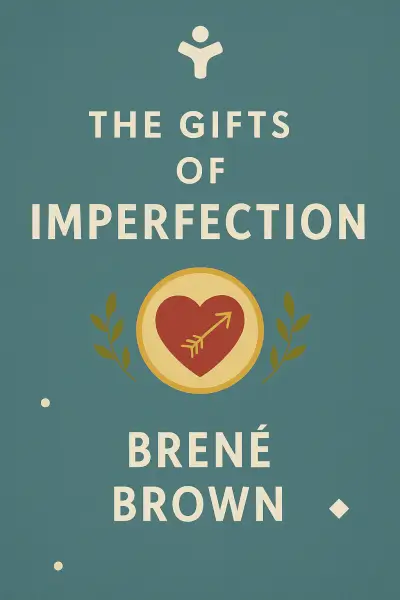
The Gifts of Imperfection
Ready to Take Action?
Get the Mentorist app and turn insights like these into daily habits.