The marketing memo that decided your first impression matters this much
Mike Markkula, who became Apple's first chairman when Jobs and Wozniak were still working out of a garage, wrote a one-page paper called 'The Apple Marketing Philosophy' that would quietly shape the rest of Jobs's career. It laid out three principles. The first was empathy, an intimate connection with what customers actually feel. The second was focus, doing a small number of things well rather than many things poorly. The third, awkwardly named but the one Jobs never forgot, was impute.
The idea behind impute was simple and a little uncomfortable: people form an opinion about a product based on the signals it sends, whether or not those signals have anything to do with the product's actual quality. 'People DO judge a book by its cover,' Markkula wrote. 'We may have the best product, the highest quality, the most useful software etc.; if we present them in a slipshod manner, they will be perceived as slipshod; if we present them in a creative, professional manner, we will impute the desired qualities.'
Jobs took this further than almost anyone would have expected. When it came time to design the box the Macintosh would ship in, packaging that a customer would look at for perhaps thirty seconds before throwing it away, Jobs had the design redone roughly fifty times. Alain Rossmann, a member of the Mac team, thought it revealed a strange lack of balance, since Apple was simultaneously trying to save money on internal memory chips. But to Jobs, the box was never just packaging. It was the first sentence of a conversation with the customer, and he intended to control how that conversation started.
The same logic decided Apple's logo. The designer Rob Janoff produced two versions of an apple shape, one whole, one with a bite taken out. The whole apple, on its own, looked too much like a cherry. The bitten one was instantly, unmistakably an apple. Jobs chose the flawed-looking option because it communicated faster and more clearly than the technically tidier one.
Decades later, describing the unwrapping experience of the iPhone and iPad, Jobs credited this exact lesson. 'Mike taught me that,' he said. The insight had outlived the man who wrote it on a single page.
Start by putting your own version of Markkula's philosophy into words, deciding what you want someone to feel in the very first seconds of encountering your work, before they've judged anything about its substance. Give that first touchpoint disproportionate effort, the way Jobs redesigned the Macintosh's box roughly fifty times even though it was headed straight for the trash within minutes. When you're choosing between two options that are close in quality, weigh how quickly and clearly each one will actually be understood, not just which one is more technically correct, the way an apple logo with a bite taken out beat a whole apple that read, at a glance, as a cherry. And once the first impression is right, make sure what's underneath actually earns it, because a great cover on a hollow product only buys you one disappointed customer.
What You'll Achieve
The listener stops treating packaging, formatting, and first impressions as a finishing touch and starts treating them as part of the actual substance of their work, while learning to weigh legibility and perception alongside technical correctness when two options are close.
Treat the cover as part of the book
Write down your own version of the philosophy
Put into a few plain sentences what you want people to feel the instant they encounter your work, before they've had time to judge the substance. Mike Markkula, Apple's early chairman, wrote his entire marketing philosophy on a single page, built around three ideas: empathy, focus, and what he called impute, the fact that people judge a book by its cover.
Spend disproportionate effort on the first touchpoint
Give unusual care to whatever a person sees, touches, or reads before anything else, even if it seems wasteful. Jobs had the Macintosh's box redesigned roughly fifty times, despite the fact that, as one team member pointed out, it would be thrown in the trash within minutes of the customer opening it.
Choose the imperfect option that reads better over the technically cleaner one
When two choices are close, weigh how each one will be perceived, not only how each one performs. Apple's new logo was tested in two versions, whole and with a bite taken out; the whole apple read, at a glance, as a cherry, so the flawed-looking option, the one with the bite, was chosen because it was instantly legible.
Carry the standard through, not just to the surface
Make sure the polish you apply to first impressions is backed by genuine quality underneath, or the impute effect will eventually collapse into disappointment. Jobs later applied the same principle to the iPhone and iPad, saying, 'When you open the box, we want that tactile experience to set the tone for how you perceive the product.'
Reflection Questions
- What is the very first thing someone experiences of your work, and how much thought has actually gone into it?
- Have you ever chosen the technically better option over the one that was instantly understood, and regretted it?
- Is there a place where your first impression currently promises more than the substance underneath can deliver?
- What would your own one-page version of Markkula's philosophy say?
Personalization Tips
- A job applicant who spends as much care on the formatting of their resume as on the substance of their achievements, since a hiring manager scans the format first.
- A restaurant owner who redesigns the menu's typography, knowing diners form an opinion about the food's quality before tasting a single bite.
- A speaker who rehearses the first thirty seconds of a talk more than any other section, because that is when the audience decides whether to keep listening.
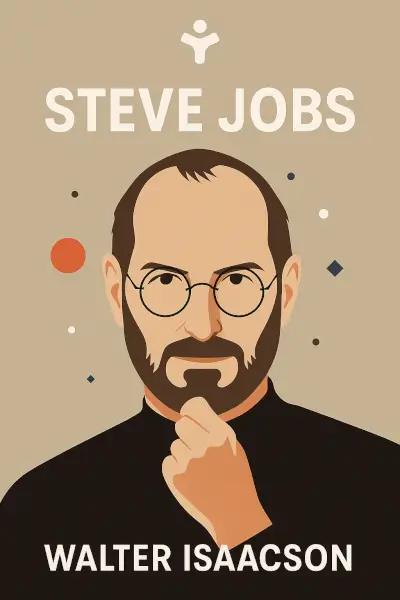
Steve Jobs
Ready to Take Action?
Get the Mentorist app and turn insights like these into daily habits.