Why the messier operating system beat the more elegant one
Why would a computer company that built the more beautiful, more coherent product still lose the market to a competitor everyone agreed was clumsier? This is one of the genuinely uncomfortable puzzles at the center of Steve Jobs's career, and he never fully made peace with the answer.
Jobs believed, throughout his life, that a computer's hardware and software had to be designed together as a single unit, what he called a 'whole widget,' with nothing left to chance and no outside hands allowed to alter the design. This is why the Macintosh had no expansion slots, why special tools were needed just to open its case, and why Jobs refused proposals to license the Macintosh operating system to other manufacturers like Tandy, even when his own marketing director argued it could help the Mac become an industry standard.
Bill Gates took the opposite path. Microsoft licensed its operating system to IBM and to any manufacturer who wanted to build a compatible machine. When Gates unveiled Windows, a graphical operating system with icons, a mouse, and overlapping windows, unmistakably inspired by the same Xerox PARC technology Apple had drawn on, Jobs summoned him to Cupertino and shouted, 'You're ripping us off! I trusted you, and now you're stealing from us!' Gates, unbothered, answered with a line that has outlived the argument itself: 'I think it's more like we both had this rich neighbor named Xerox and I broke into his house to steal the TV set and found out that you had already stolen it.'
Windows 1.0, when it finally shipped in 1985, was by most accounts inferior to the Macintosh interface, tiled and clumsy where the Mac's windows elegantly overlapped. Reviewers mocked it. And yet, over years of persistence, it became dominant, because it ran on machines from dozens of manufacturers rather than one. Jobs never stopped resenting this. 'The only problem with Microsoft is they just have no taste,' he said, more than a decade later, still visibly stung. But the deeper lesson sits underneath his frustration rather than his complaint: closed, coherent systems can produce better individual products, while open, licensed systems can produce bigger markets, and nobody, not even Steve Jobs, gets to have both at once.
Before you commit to a direction, decide honestly whether you are chasing the best possible experience or the widest possible reach, because trying to have both at full strength rarely works. If you choose tight control, the way Jobs did by refusing to license the Macintosh's operating system to other manufacturers, expect a smaller but more coherent audience, and make peace with that trade-off in advance. If a competitor starts copying your idea in a rougher form, resist the temptation to simply match their compromises just to keep pace. And prepare yourself, however unwelcome the thought, for the possibility that the less elegant option might still win more customers, faster, exactly as the clumsier Windows eventually outsold the more refined Macintosh.
What You'll Achieve
The listener gains a clear framework for a trade-off they will meet in almost any creative or business decision, control versus reach, and becomes able to choose a side deliberately instead of drifting into it, while accepting that even the better product can still lose.
Choose deliberately between control and reach
Decide up front whether you are optimizing for quality or scale
Before you build anything, ask honestly whether your priority is a tightly coherent experience or the widest possible reach, because Jobs's insistence on designing hardware and software as one inseparable 'whole widget' for the Macintosh limited how many machines could run it, while Microsoft licensed its operating system to any manufacturer willing to pay.
Expect to sacrifice one for the other, at least for a while
Accept that tight integration and broad licensing pull in opposite directions, and that choosing one has a real cost. The Xerox Star, built with the same graphical ideas Apple would refine, sold only thirty thousand units and flopped, partly because it was too expensive and too narrowly aimed.
Protect what makes your version better, even under pressure
When a rival starts building something that looks like yours, resist the urge to simply copy their compromises. When Bill Gates unveiled Windows, Jobs confronted him directly, and Gates answered with the now-famous line about 'a rich neighbor named Xerox' whose television they had both, in effect, stolen.
Remember that superior design does not guarantee the market
Prepare yourself for the possibility that the more coherent, more elegant product may still lose share to a clumsier one that reached more people sooner. This is exactly what happened to the Macintosh against Windows, despite Windows initially being, in Jobs's own blunt assessment, 'a piece of shit.'
Reflection Questions
- In your current project, are you optimizing for the quality of the experience or the number of people who can access it?
- Where have you seen a rougher, more available option beat a more polished, more restricted one?
- If a competitor copied your idea in a simplified form, would you feel robbed, or would you recognize it as an inevitable cost of being first?
- Is there a place where you are trying to have both control and scale, and quietly paying for both compromises at once?
Personalization Tips
- A boutique restaurant that controls every ingredient and technique may serve better food than a franchise, but the franchise will likely open more locations faster.
- A software developer who insists on building every feature from scratch may produce something more polished than a team that stitches together existing plug-ins, but will ship later.
- A parent who insists on doing every school project by hand with their child keeps quality high but sacrifices the time other families spend on activities that reach more kids.
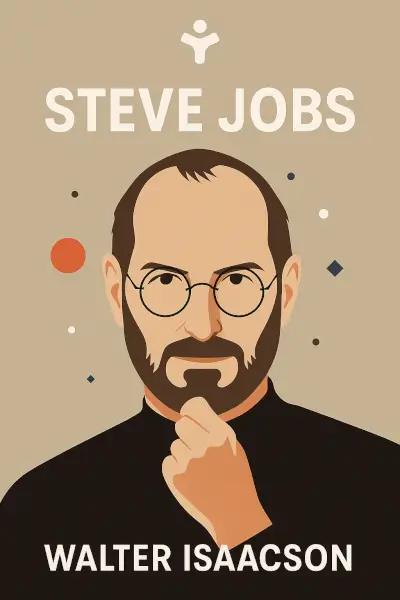
Steve Jobs
Ready to Take Action?
Get the Mentorist app and turn insights like these into daily habits.