Discover why 'free' isn't really free and how it shapes better choices
A table at a college fair overflows with free pens, notepads, and keychains. Students swarm, grabbing whatever they can fit in their bags. Later, most items languish untouched, destined for the back of a drawer. One student, Anna, takes just a moment before reaching out, runs her hand over the pile, and then says, 'Do I really need another pen?' She realizes her pencil case is already stuffed, skips the freebie, and feels oddly light as she leaves. Meanwhile, her friend counts out a stack of coupons and flyers, already overwhelmed.
In the break room at a new office, a tray of leftover cake announces 'FREE—Help Yourself!' Mark, trying to eat healthier, pauses. He glances at the cake, remembers last week's decision to cut sugar, and heads out with his lunch instead. That afternoon, he feels a sense of accomplishment, while colleagues mutter about mid-afternoon slumps.
Behavioral scientists call this the zero price effect: when something costs nothing, our emotional excitement overrides logic, making us overvalue the offer and ignore potential downsides. Rationally, a price difference between 1 cent and 0 should be minor, but zero triggers a fear of missing out and a strong aversion to potential loss. Experiments show people shift dramatically toward the free option, even if another choice provides better value. Recognizing this hidden magnetism of 'zero' lets you make decisions based on real benefit, not just raw excitement.
Next time you’re tempted by something just because it’s free—a giveaway snack, a free app, or another T-shirt—pause. Remind yourself to check if you truly want or need what’s being offered. Ask whether you’re giving up time, storage, or your own focus to chase a freebie. Try declining a few free offers this week and notice how you feel afterward. By bringing awareness and intention to these moments, you’ll start making choices that leave you less cluttered and more in control. Give it a try today—see if you’re happier without that extra pen or cookie.
What You'll Achieve
Learn to resist the lure of free offers, choose with intention, and reduce regret or clutter from impulse decisions. Internally, you’ll feel more confident and less manipulated; externally, you’ll save time, money, and energy.
Handle the Power of Zero for Smarter Decisions
Pause before accepting anything free.
Each time you see something offered as 'free', give yourself a moment to consider whether you truly want or need it—be it a free app, sample, or extra dessert.
Compare actual benefits, not just price.
Weigh the real value and usefulness of free options against paid alternatives, noting how often you end up with clutter or wasted time from things you didn’t actually desire.
Factor in hidden costs.
Ask yourself if obtaining the free item costs you in terms of time, attention, or leads you to unwanted commitments (such as filling out forms, standing in long lines, or buying unnecessary add-ons).
Experiment with turning down free offers.
Practice politely saying ‘no’ to free promotions, snacks, or giveaways for one week, then reflect on whether you gained more satisfaction or peace from the things you chose intentionally.
Reflection Questions
- When was the last time a free offer led you to take something you never used?
- What hidden costs have you paid chasing 'free' benefits?
- How would your life look with fewer unnecessary items or wasted time?
- Do you feel more satisfied when you choose what to accept, even if you pay something for it?
Personalization Tips
- At school, do you take every freebie at clubs, even if you never use them? Try refusing and see what happens.
- In your family, resist 'buy one get one free' deals unless you need both items.
- At work, don’t sign up for free trials you’re unlikely to use—track how many unused apps clutter your devices.
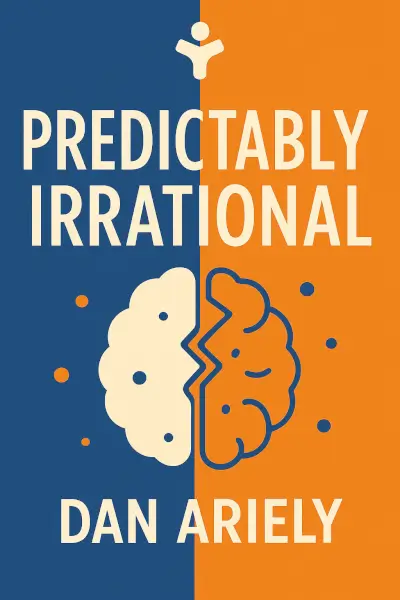
Predictably Irrational: The Hidden Forces That Shape Our Decisions
Ready to Take Action?
Get the Mentorist app and turn insights like these into daily habits.