Vulnerability and Courage at Work—Why Admitting Fear or Uncertainty Can Actually Build Authority
You watch a respected leader answer questions with ease—but when caught off-guard, they admit, 'Honestly, I’m not sure about that yet.' Instead of undermining respect, the room visibly relaxes. Later, someone tells you privately, 'I really appreciate that you’re willing to say you don't know.' This moment sticks with you.
At your own job, you decide to try it. When asked about a challenging timeline, you admit you’re uncertain and request input. The effect is immediate—colleagues step up, and a collaborative solution forms. While you had worried about looking weak, the act of showing vulnerability made the team see you as authentic and confident.
Research in leadership and psychology shows this works because authentic vulnerability signals trust in the group and reduces fear of mistakes. Over time, such environments are more creative, resilient, and productive. It's not about confession for its own sake, but about activating a culture of shared learning and support.
This week, pay attention to moments you feel unsure, and resist the urge to cover with bravado. Prepare—and actually say—a statement like ‘I’m struggling with this, but here’s what I’ve tried so far’ or ‘I'm concerned, but open to ideas.’ The first time can feel scary, but notice how others lean in to offer help or empathy. You’ll be surprised how much stronger you—and your whole group—will become when vulnerability is respected, not hidden.
What You'll Achieve
You will build trust, deepen relationships, and develop the self-assurance to lead through uncertainty, while inspiring others to do the same.
Name and Share One Vulnerable Truth This Week
Notice situations where you hide doubts or fears.
Each day, be mindful of moments when you suppress uncertainty—whether it's in meetings, emails, or decisions. Mark the most challenging instance.
Script and practice a 'vulnerable statement.'
Prepare a brief line like, 'I don't know the answer yet, but I’m committed to finding out,' or, 'I'm nervous, but willing to try.' Practice it alone, then in a low-stakes setting.
Share your vulnerable truth in an appropriate context.
Choose a moment this week—perhaps during a team update or after a mistake—where you can voice your uncertainty or ask for help. Notice the impact on your relationships and sense of authority.
Reflection Questions
- What’s my biggest worry about being open at work or school?
- How would owning vulnerability change my relationships?
- What’s one place I could safely test this idea?
- How do leaders I admire handle uncertainty?
Personalization Tips
- At work: Admit you're unsure about part of a project in a team check-in.
- In school: Tell a friend you’re anxious about an exam, and ask if they’ll study with you.
- In parenting: Share with your child that it’s okay not to know everything, modeling learning.
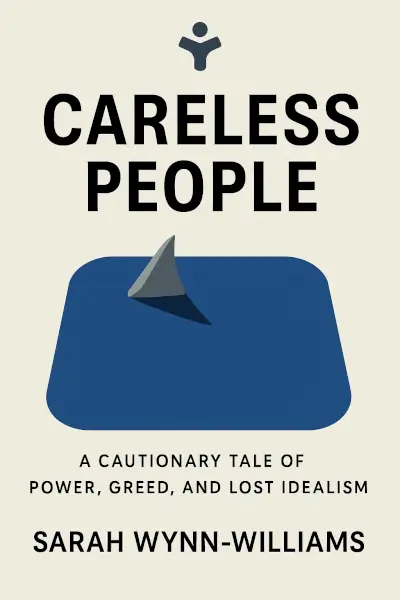
Careless People: A Cautionary Tale of Power, Greed, and Lost Idealism
Ready to Take Action?
Get the Mentorist app and turn insights like these into daily habits.