Break Free from the Overconfidence Cycle: How Smart People Get Stuck and What to Do Instead
Even the sharpest minds can fall into stubborn ruts. The more expert we become, the more our brains start to run on autopilot—assuming we know best, resisting data that doesn’t fit, and missing signs we could be wrong. A classic example: doctors-in-training making errors because they overestimate their clinical abilities, oblivious to the cracks in their reasoning. This isn’t just ego; it’s a lack of metacognitive skill—thinking about our own thinking.
In business, leaders may rate their management skills sky-high (regardless of objective outcomes), and social science shows they’re often the least likely to invest in coaching that could sharpen those skills. The higher we climb, the more dangerous it becomes to ignore cognitive blind spots. Simple tools like trying to explain our reasoning to a novice or accepting that initial feedback is uncomfortable but valuable can dramatically shift us out of automatic pilot.
Researchers call the tendency to ignore weaknesses while overvaluing strengths the overconfidence cycle. It’s not just a mindset issue—it directly slows our growth and limits our impact if left unchecked.
Pick something you’re convinced you do well—managing, cooking, studying. Take five quiet minutes to explain it out loud (or write it down) as though teaching a beginner. Notice where your story gets fuzzy, or you rush past steps. That’s a signal to slow down and investigate further. Next time feedback feels threatening, say to yourself, 'I might be blind to something here,' and actively ask for an example or a suggestion. See if your beliefs still line up with hard evidence, or if a little honest skepticism might serve you better. Try this before your next major decision—and watch for subtle but powerful shifts.
What You'll Achieve
Catch costly mistakes before they happen, boost your rate of learning, and make better-informed decisions by systematically challenging easy certainty.
Check for Cognitive Blind Spots Regularly
Test your knowledge with 'explain it' drills.
Pick a topic you’re sure you understand, and try explaining it simply (as if to a 10-year-old). Notice where you stumble or gloss over details—those are your blind spots.
Track feedback resistance.
After receiving tough feedback, observe your inner reactions—do you dismiss it as irrelevant, or do you genuinely consider it?
Compare gut feelings to external data.
For important decisions, see if your confidence matches what objective evidence or outsider opinions say.
Reflection Questions
- Where do I feel most certain, and when did I last check for blind spots?
- When was the last time feedback changed my view? Why or why not?
- What areas of my life might benefit from a round of 'explain it like I’m 10'?
Personalization Tips
- Before making a big financial decision, explain your plan to someone unconnected to the issue and see what questions come up.
- If you’re sure your new workout plan is perfect, describe step-by-step how it delivers results—track where you get vague.
- When a friend critiques your opinion, pause instead of reflexively defending it, and reflect on patterns of defensiveness.
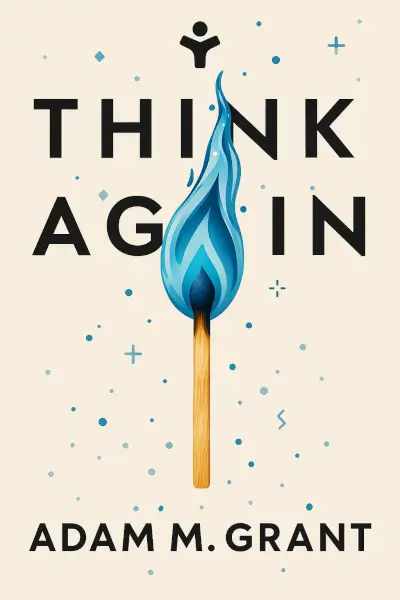
Think Again: The Power of Knowing What You Don't Know
Ready to Take Action?
Get the Mentorist app and turn insights like these into daily habits.