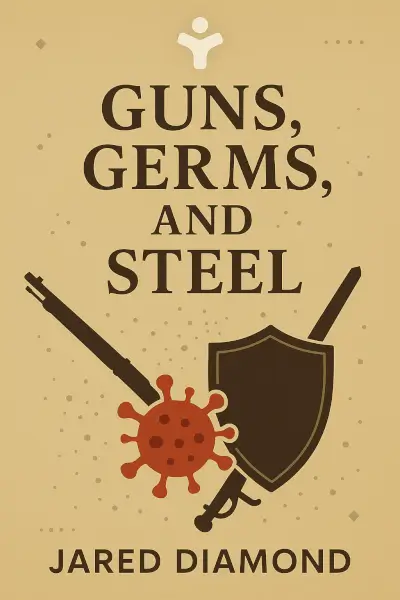
Guns, Germs, and Steel: The Fates of Human Societies
The Uncomfortable Truths Behind How Geography, Not Genetics, Shaped Who Wins and Who Loses in Human History
About This Book
Step into a riveting journey across 13,000 years of human history where continents, not cultures, determined the winners and losers of global power. Challenge your assumptions as you discover how access to domesticable plants and animals, and even the orientation of entire continents, dictated which societies developed advanced technologies, built empires, and spread influential languages. Backed by vivid stories—from the collision at Cajamarca to the fate of the Moriori—this insightful narrative dismantles racial myths and sheds light on the subtle causes of inequality. Arm yourself with a new lens to understand why history unfolded so unevenly, and how deep patterns still echo today.About the Author
Jared Diamond is an acclaimed evolutionary biologist, geographer, and Pulitzer Prize–winning author whose work bridges natural and social sciences. Drawing from decades of fieldwork among indigenous communities in New Guinea and research trips across six continents, Diamond has shaped public debates about human history and the roots of inequality. His approachable style and interdisciplinary expertise bring clarity to complex topics, making him a trusted voice on issues ranging from environmental policy to societal development.
Biggest Takeaway
Readers can expect to gain a nuanced understanding of world history that discards outdated notions of racial or cultural superiority. Instead, they'll uncover how environmental factors, geography, and the accident of biological resources fueled some societies' dominance and others' marginalization. These insights foster critical thinking, cultural empathy, and the ability to identify deep-rooted causes of present-day economic and social disparities. Equipped with this knowledge, readers will be prepared for more informed debates, policy discussions, and personal reflection on global inequality and opportunity.
Key Insights from This Book
Explore the most important ideas and learn how to apply them in your life.
Why Some Societies Rose While Others Stalled—It Wasn't About Brains or Culture
Big History Reveals How Food Production Birthed Empires, Cities, and War Machines
The Geography of Domesticated Plants and Animals Decided Who Ruled and Who Fell
Why Some Inventions Never Spread—Continents' Axes and Natural Barriers Trumped Ambition
Shattering the Myth: Biological Intelligence Had Little to Do With Societal Success
The Anna Karenina Principle: One Flaw Dooms Potential, Not Just People or Products
Civilization's Double-Edged Sword: Why 'Progress' in Technology and Statehood Isn't Always Happiness
Challenging the Victors’ Narrative: How Conquest Patterns Shape Modern Inequality
Want More Actionable Insights?
Get the Mentorist app and turn knowledge from hundreds of books into daily actions.