Your Values Shape Your Problems—Are Yours Making You Miserable?
Everywhere you turn, society hands you a script for success—be wealthier, more admired, always right, constantly positive. But following this script leaves many people anxious, insecure, and feeling like they’re never enough. Why?
It comes down to values: the hidden criteria you use to judge yourself and others. Sometimes, these values may not even be your own—they might be absorbed from parents, friends, or media. For example, if you believe being right is everything, you’ll argue to exhaustion and miss the joy of learning. Measuring yourself by how many likes you get turns every post into a potential disappointment. Research shows that people whose values are internal and controllable—like integrity, effort, kindness—are more content than those who only focus on external markers like popularity, status, or being perfect.
Changing your values isn’t about pretending problems don’t exist, but about swapping out the ones that create unnecessary suffering for ones that give your efforts meaning. Good values are honest, actionable, and reality-based. Bad values are uncontrollable, superficial, and drain you of satisfaction, no matter how hard you chase them.
Grab a pen and jot down the things you most often use to judge your own success—money, achievement, other people’s opinions, or maybe just always feeling happy. For each one, ask yourself honestly, 'Does focusing on this make me feel empowered or drained?' Challenge yourself to strip away one shallow metric—maybe you let go of needing everyone to agree with you—in favor of something deeper, like contributing or growing each day. Practice swapping these values whenever you catch yourself stuck; soon, your self-worth will work for you, not against you.
What You'll Achieve
Expect to feel less anxious, more resilient, and more fulfilled by your achievements. Internally, you’ll have greater self-esteem rooted in what you control; externally, you’ll be more authentic and less reactive.
Audit and Upgrade Your Hidden Value System
Identify your current values and metrics.
Write down a few things you use to judge your self-worth—money, popularity, looks, being perfect, etc.
Ask how these values serve you.
For each value, note whether focusing on it improves your life or leads to anxiety, envy, emptiness, or conflict.
Swap shallow values for deeper goals.
Exchange metrics you can't control (others’ approval, constant happiness) for those you can (honesty, kindness, improvement).
Reflection Questions
- What do I most often judge myself or others for?
- How do my current values help me—or hurt me—in challenging times?
- What values would I be proud to build my life upon?
- How do my chosen values affect my relationships and self-worth?
Personalization Tips
- A student shifting focus from grades alone to valuing perseverance and curiosity.
- An athlete moving from chasing trophies to measuring effort and teamwork.
- A partner choosing to value honesty in a relationship over appearing always agreeable.
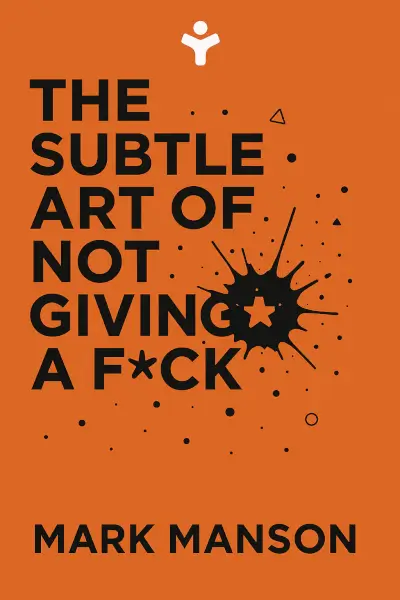
The Subtle Art of Not Giving a F*ck: A Counterintuitive Approach to Living a Good Life
Ready to Take Action?
Get the Mentorist app and turn insights like these into daily habits.