Why Language Shapes Reality—and the Surprising Power of Words to Exclude
Language isn’t just a way to communicate—it’s a lens for seeing who matters and who’s invisible. For decades, textbooks, news media, and even emojis have defaulted to male figures or language, teaching generations to associate leadership, expertise, and normalcy with men. Experiments prove the point: people reading job ads in the masculine, or surveys with 'he' as a standard, are far more likely to imagine men, suggest male candidates, and see professions as male-dominated, even in fields where women are the majority. The default creeps into our minds, coloring everything from who gets put forward for jobs to who believes they ‘fit’ in certain spaces.
Behavioral psychology calls this the power of priming: when you hear 'man' or 'doctor' over and over in one context, your brain builds associations—often below conscious awareness. These hidden cues subtly discourage women from applying for jobs, participating fully, or seeing themselves as related to ‘universal’ human stories. The solution isn’t to swing all the way in the other direction, but to be thoughtful, proportionate, and explicit in our language choices. It’s a small shift with outsized effects, expanding who sees themselves as part of the picture.
Reflect on the last few things you wrote or said—did you use gendered defaults, or make someone’s ‘otherness’ stand out unnecessarily? Begin by rewording your next group message, announcement, or post with inclusive terms and stories. If you hear someone slipping into old habits, offer a friendly suggestion, explaining how small words can shape who feels welcome. Show up as a model for your circles. Once you start, you’ll notice not just who you include, but who around you becomes more visible and confident as a result.
What You'll Achieve
Foster a greater sense of belonging and participation for all, help counter unconscious bias, and improve clarity and fairness through mindful language choices.
Use and Promote Truly Inclusive Language Each Day
Notice default gender in your speech and writing.
Pay special attention to the pronouns and general references you use for people in your profession, school, or stories.
Switch to gender-explicit or gender-fair terms.
Use 'he or she,' 'they,' or alternate between male and female examples in group settings, instead of relying on generic masculine or titles like 'guys'.
Educate and correct gently when you see language excluding a group.
Offer brief, friendly reminder: 'Hey, let's say 'firefighter' or 'students' instead.' Point to examples where gendered terms affected participation.
Lead by example in meetings and online.
In your own communications, prioritize phrases and titles that reflect everyone—share the why, not just the what.
Reflection Questions
- Do I unconsciously default to male examples or terms?
- How might my language choices be affecting others’ confidence or participation?
- What shifts do I notice—personally and among others—when I deliberately use inclusive language?
Personalization Tips
- In school reports or presentations, review if your examples always default to male; update them.
- At work, suggest rewriting job ads to use gender-fair forms and track the impact on applicant diversity.
- If you’re on social media, challenge group language like 'dudes' or 'guys' when used for mixed groups.
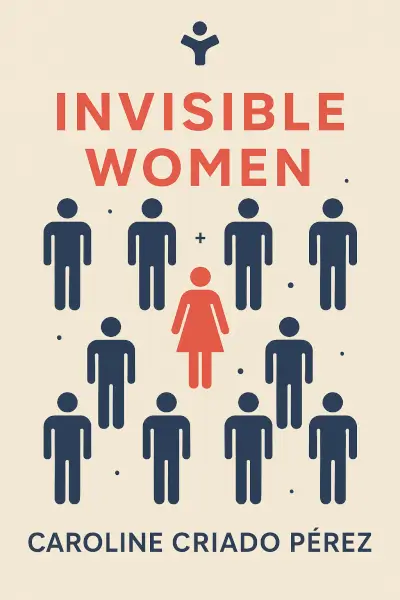
Invisible Women: Data Bias in a World Designed for Men
Ready to Take Action?
Get the Mentorist app and turn insights like these into daily habits.