Why Recognizing the ‘Gender Data Gap’ Is a Prerequisite for Real Change
Behind almost every persistent inequality is a missing set of facts. When hospitals calibrate medicine dosages, they often rely on data from the ‘average’ male, ignoring differences that make treatments less effective or even dangerous for women. In city transit planning, the default user is the solo commuter, usually a man, overlooking how trip-chaining—multiple stops for family and errands—dominates women’s travel and exposes them to risks and inefficiency. School textbooks, government policies, and even AI algorithms subtly (or overtly) use data that lumps women’s realities into generic categories or omits their voices altogether.
This isn’t just a problem of ignorance—it’s a problem of perpetuating blind spots. Behavioral science tells us that people see what they measure, and act on what seems visible. Without sex-disaggregated or ‘broken-out’ data, women’s injuries in traffic accidents, care burdens, or medical side effects go unseen and thus unsolved. When data is ‘missing’ or people are grouped together (“workers,” “doctors,” “students”), half the population remains effectively invisible to policy makers, designers, and leaders.
Closing these gaps isn’t just an academic exercise—it’s the first vital step to creating genuinely fair and functional solutions. It starts by noticing patterns—where’s the data grouped, who’s represented, who’s discarded as an afterthought? Then, it takes the courage to ask for the evidence, question the status quo, and demand that differences become visible so real needs can be met. This approach isn’t just about fairness; it’s about making smarter, more effective decisions in every arena.
Start by mapping out the sources of data that influence policies in your daily spaces—does your workplace or community actually know who uses what, or are decisions based on generic assumptions? Next time you’re handed a report or review, don’t accept vague labels like 'people' or 'users' without asking who’s really included. Make it a habit to highlight specific consequences of missing, lumped, or sex-blind data—extra injuries, longer waits, or wasted funds. Push your organization or school to gather and use sex-disaggregated information; better numbers mean better choices. Change begins wherever you ask, and keep asking, 'Who’s really counted here?'
What You'll Achieve
Learn to identify hidden biases in the information guiding your world, develop the habit of seeking and championing more accurate data, and help drive smarter, more personalized solutions across systems.
Identify and Close the Data Gaps Around You
Map out what data influences key decisions.
Whether it’s school curriculum, workplace policies, or city planning, list the types of data used to make choices. Pay special attention to which groups are represented or left out.
Ask pointed questions when data is missing or lumped together.
Notice when information is generalized under terms like 'people,' 'workers,' or 'students.' Challenge reports that don’t break data down by sex or other meaningful categories.
Document consequences of missing or unbroken data.
Identify real-life results caused by these gaps—longer commutes, higher injury rates, overlooked illnesses, or inferior services.
Advocate for or participate in sex-disaggregated data collection.
Push local organizations, schools, and governments to not only gather, but also use, gender-specific data to evaluate and improve outcomes.
Reflection Questions
- What key decisions in my life might be based on incomplete or skewed data?
- Where have I accepted a ‘neutral’ standard that actually disadvantages others?
- How could better data improve outcomes for people currently left out?
Personalization Tips
- In your workplace, check if performance reviews or bonuses are analyzed by gender—raise the issue if they're not.
- At school board meetings, question whether girls’ and boys’ participation and needs are tracked separately, especially in sports or STEM programs.
- When reading news about healthcare, look for mentions of how research includes or fails to include women’s experiences.
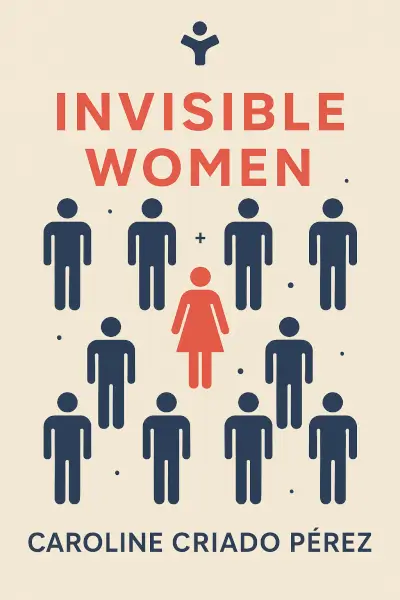
Invisible Women: Data Bias in a World Designed for Men
Ready to Take Action?
Get the Mentorist app and turn insights like these into daily habits.