The Honorable Harvest—A Radical Framework for Ethical Consumption
Robin Wall Kimmerer walks down the aisles of her local store and pauses at the sight of wild leeks, sealed and labeled with a price per pound. There's a visceral discomfort, not just about the cost, but the act of selling what was meant to be a gift. She picks up a bundle, feeling the familiar texture and vivid scent, but wonders who picked them, where, and whether they will return to replenish the spot.
She reflects on the rules she learned: never take the first, never take the last, and only what is needed. The concept of 'the honorable harvest' doesn’t fit with the feeling of purchasing a wild thing packaged and out of place. This moment triggers self-questioning—how much of what she buys actually honors origins, reciprocal care, or the true costs of things? The world doesn’t hand us a “right way” card at the checkout, but the discomfort nudges her to act differently: sometimes, to go without, to choose only when something is freely given, and to always consider how to give something back.
This encounter illustrates the complex, sometimes uncomfortable reality of ethical consumption. Ethical frameworks—like the Honorable Harvest in Indigenous thought—challenge blind consumption, inviting us to see every choice as part of a living web of relationships. It’s hard, sometimes contrary to habit, but it is a powerful lens for living with integrity.
The next time you reach for your wallet—maybe for a snack, a shirt, or some shiny new thing—let yourself pause, if only for ten seconds. Ask, 'Do I genuinely need this? Who or what provided it, and am I honoring their labor or sacrifice?' If you choose to buy, find a simple way to reciprocate—maybe you donate something, choose a more eco-friendly version, or just use it carefully and thankfully. Over time, these pauses and small actions will start to compound, making every purchase or use a little more meaningful and a lot more responsible.
What You'll Achieve
Internally, you’ll develop a sharper, more reflective awareness of your impacts and values, leading to reduced guilt and more meaningful acquisitions. Externally, your choices generate less waste, more reciprocity, and positive social and ecological impact.
Apply Honorable Harvest Rules Before Your Next Purchase
Pause before you buy or use something new.
Whether it’s food, clothes, or a gadget, stop for a moment before purchase or use.
Ask yourself: Do I really need this?
Reflect on whether your desire is based on genuine need or habit. Try to define your need concretely—will it solve a real problem or just fill space?
Consider how the item was produced.
Check its origins, materials, and the lives impacted—who made it, what was required, what environmental cost (if any) was involved?
Commit to reciprocity or a compensating action.
If you choose to proceed, think about a way to give back—reuse, recycle, make a donation, or support a sustainability initiative.
Reflection Questions
- Which recent purchases truly reflected my needs versus my habits?
- How can I trace the origins and impacts of what I use each day?
- What form of giving back feels natural and sustainable for me?
Personalization Tips
- Choose to borrow a textbook or tool instead of purchasing a new one.
- Buy from a thrift store, then donate something in return.
- Forego a new gadget and instead fix or repurpose something you already own.
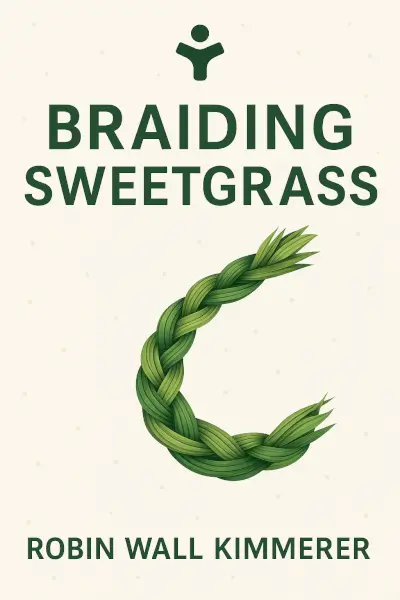
Braiding Sweetgrass: Indigenous Wisdom, Scientific Knowledge, and the Teachings of Plants
Ready to Take Action?
Get the Mentorist app and turn insights like these into daily habits.