Want to Stand Out? Hand-Drawn Sketches Beat Perfect Slides
A junior team member, Sarah, is nervous before her first big presentation. Everyone else at her company relies on flashy slides, but her mentor suggests she try something different. During the meeting, she walks up to the whiteboard with a marker in hand. Her sketches are rough—circles, arrows, some hasty stick figures—but as she draws, her explanation becomes both visual and collaborative.
At first, a few managers look surprised, but something shifts as Sarah pauses and asks if anyone wants to add to the drawing. Before long, someone in finance walks up and draws a missing step. The conversation, now focused on the evolving sketch, becomes animated and far less formal. Rather than feeling like a test, the team responds eagerly. People debate, laugh over her cartoonish dog, and even the skeptical VP takes the highlighter to suggest an alternative route for the process.
Later, Sarah realizes the impact wasn’t from artistic skill or software polish, but from making her thinking visible and inviting others to participate in problem-solving. Behavioral science supports this, suggesting rough, dynamic visuals lower defenses and boost group creativity—everyone feels their input matters when the sketch is clearly a work in progress, not a finished piece.
Next time you’re at a meeting or explaining a tricky concept, resist the urge to make it pretty with digital tools. Grab a pen and sketch as you talk, letting your rough lines drive the point home. Then, pause and invite your colleagues to chime in or even add their own ideas directly to the drawing. Watch how the atmosphere shifts to one of shared discovery and laughter, opening space for honest feedback. Try it at your next team huddle or family brainstorm—see how much farther you get together.
What You'll Achieve
Build confidence to communicate ideas visually in any group setting, foster collective problem-solving, and make meetings more engaging and honest. Expect more buy-in, faster consensus, and surprising contributions from quieter voices.
Use Imperfect Drawings in Real Conversations
Choose pen and paper over digital tools.
Bring a notepad or even sticky notes to meetings or study sessions instead of defaulting to PowerPoint or a laptop.
Draw live while discussing ideas.
As you explain something, sketch simple shapes—boxes, arrows, stick figures—so others see your thinking unfold in real time.
Invite others to add or comment.
Hand over the pen or ask others what should be added or changed, creating a collaborative atmosphere where everyone feels comfortable suggesting edits.
Reflection Questions
- What holds you back from drawing in group settings?
- How do people respond differently to sketches versus slides?
- Did someone surprise you by grabbing the pen or adding something unexpected? How did that feel?
- How might you adjust your approach after seeing these results?
Personalization Tips
- During a family discussion about chores, draw a flowchart of who does what—watch siblings eagerly grab the pen to add their tasks.
- When explaining a science project, sketch the process step by step to help teammates feel involved and catch errors early.
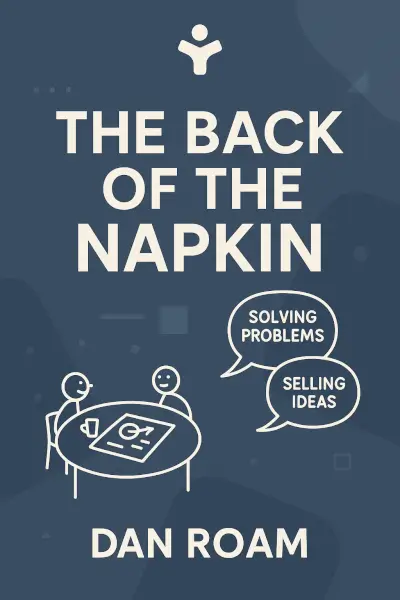
The Back of the Napkin: Solving Problems and Selling Ideas with Pictures
Ready to Take Action?
Get the Mentorist app and turn insights like these into daily habits.