Why Mission Statements Fail and How Mantras Ignite Real Action
Most organizations begin with the best intentions but quickly drift into making mission statements packed with jargon, length, and pleasing words that no one uses or remembers. Teams debate wording for hours, trying to serve everyone’s interest, until the result is generic, bland, and uninspiring. Then, when someone is asked what the group stands for, the answer is a confused ramble or a long-winded recitation that means nothing in practice.
Compare this scene to the atmosphere of a company where everyone repeats a sharp, simple mantra daily—'Save Babies,' 'Make Learning Easy,' or 'Fuel Curiosity.' People smile when they say it. In meetings, a new idea is measured against those three words: do we actually deliver on our mantra? If not, the idea gets shelved. Employees remind each other of why they started in the first place. Outsiders—customers and families—can immediately grasp what makes the team different. Suddenly, decisions are faster, energy is focused, and pride grows.
Research in behavioral science shows that concise, emotionally resonant cues (mantras) are far more effective at shaping group habits than abstract or ambiguous goals. Cognitive load theory explains that people can only hold a small amount of information in working memory. Simple mantras serve as anchor points, cutting through distraction and aligning everyone with the group's core identity. It’s not about dumbing things down, but about making deeper wisdom accessible—and actionable—in any moment.
Think about what truly matters most for your project or team; write it down, then keep trimming until you reach three or four forceful words that stir you. Share this mantra with your team and a friend who doesn't know much about your work—see if it sticks in their minds tomorrow. If it vanishes, simplify it further, and try again. You'll know you've nailed it when someone repeats it back, smiles, and it actually guides a real decision. Give it a shot this week and see how much easier aligning actions becomes.
What You'll Achieve
You will foster a team identity that is instantly understood and shared, guiding day-to-day actions and tough choices. This clarity strengthens motivation, speeds up decision-making, and builds a culture where everyone is on the same page.
Craft a Power Mantra Your Team Remembers
Reflect on the core meaning you want to create.
Ask yourself not what you want to achieve, but why—what need or problem are you truly passionate about addressing? Anchor your answer in a personal experience or customer need.
Reduce your purpose to three to five words.
Be ruthless in distilling your why. Strip away buzzwords and abstractions until only the emotional or actionable heart remains, like 'Stop Suffering' or 'Save Babies.'
Test your mantra with your team and a neutral outsider.
Ask them to recall it after one day and explain what it means. If anyone hesitates, simplify further. If it prompts a smile or a story, you’re getting close.
Reflection Questions
- When have you felt most proud of your group or project?
- How does your mantra help or hinder real decisions?
- What would you say if you had to summarize your work in just three words?
- What is lost when your team relies on a mission statement no one can repeat?
Personalization Tips
- At work: A student-run charity articulates 'Every Child Reads' to unify and drive their programming decisions.
- In health: An exercise group chooses 'Movement Feeds Joy' as a grounding reminder for daily motivation.
- In family: Parents use 'Kind Words Always' as the mantra guiding home conflict resolution.
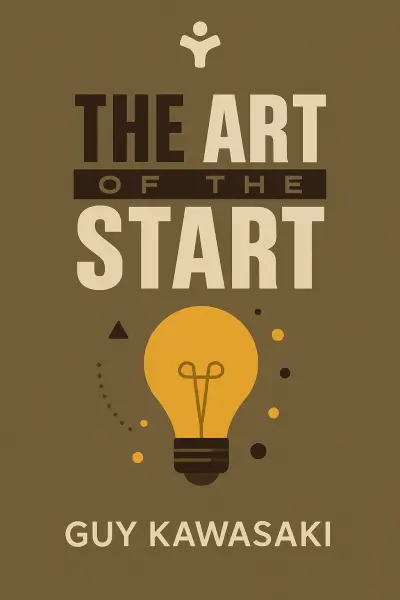
The Art of the Start: The Time-Tested, Battle-Hardened Guide for Anyone Starting Anything
Ready to Take Action?
Get the Mentorist app and turn insights like these into daily habits.