How Failure and Bold Risk-Taking Drive Sustainable Success—But Only If You Adapt
You probably know what it feels like to play it safe, sticking to routines even when they get you nowhere. But the world’s most successful creators and entrepreneurs treat failure less like defeat and more like essential research. The trick isn’t just taking risks, but deliberately designing small-scale experiments that let you fail fast, learn, and move on quickly. Picture yourself starting two side projects this month: one fizzles, but you take a note about where your assumptions went wrong; the other slowly starts to build momentum, so you decide to focus there.
It’s easy to take failure personally, to feel embarrassment or frustration. But science shows that reframing failure as information shifts your brain’s mindset from threat to learning. Jeff Bezos openly celebrates failed experiments, as long as they’re fast and the core business remains protected—they call these 'Type 2' risks. Each time you skip the shame and instead ask, 'What did this experiment teach me; what will I do differently?', you increase your odds of stumbling onto a breakthrough faster.
Deliberate risk-taking—balanced by honest, scheduled review of what is and isn’t working—keeps you nimble whether you’re building a business, growing your creative practice, or navigating school assignments. The real failure isn’t trying and missing; it’s refusing to learn or staying too long with things that don’t pan out.
Tonight, list three outcomes you’re unhappy with from the past year, and consider what each taught you—big or small. Brainstorm a few low-risk ideas to try this month, and set a simple way to measure whether each is moving the needle. At regular intervals, honestly check in with yourself, cutting the dead weight and focusing on what’s gaining traction. The difference isn’t in being fearless—it’s about being smarter and more adaptable every time you fall and get back up. Start testing.
What You'll Achieve
Increase your capacity for bold but low-risk experimentation, reduce self-criticism after setbacks, and develop an adaptive routine that boosts odds of creative or professional breakthroughs.
Reframe and Launch More Experiments—Then Tweak or Cut Fast
List your last three failures and lessons learned.
Reflect on setbacks—not just what went wrong, but what you’d repeat differently and what you’d try next time.
Brainstorm three 'testable' low-risk ideas you could try this month.
For each, set a clear metric for success and a kill-switch (criteria that tell you to stop if it’s not working).
Build in a regular review to cut losses or scale winners.
At the end of each week or month, check each experiment’s progress and decide: double down, tweak, or discard.
Reflection Questions
- What’s a recent failure that taught you something valuable?
- How quickly do you adapt or pivot when a plan isn’t working?
- Are you honest about what’s not working, or do you hang on too long?
Personalization Tips
- Trying different study methods for a major exam, but dropping the ones that waste time after a week.
- Testing several marketing messages but quickly switching focus if you don’t see engagement.
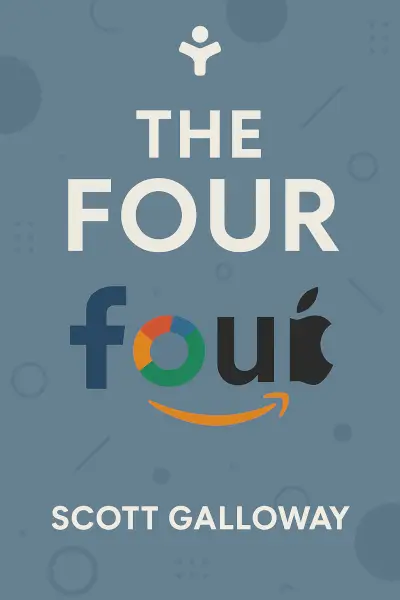
The Four: The Hidden DNA of Amazon, Apple, Facebook, and Google
Ready to Take Action?
Get the Mentorist app and turn insights like these into daily habits.