When Stuck, Quit the Dead Ends and Reinvest in a Promising Dip
You stare at your computer, dreading Monday’s video call—a team meeting with the same four people, on a project that never moves. The snacks you used to bring go untouched, your ideas go ignored. You sense you’re drifting, but guilt tells you it’s 'responsible' to stick it out. Weeks blur together, with little to show for it but a growing sense of frustration.
One lunch break, a friend tells a story about quitting her tutoring gig to focus on coding. ‘Everyone thought I was flaky, but now I’ve landed a summer job that really excites me.’ You realize sometimes, coping is a mask for giving up on progress. Your involvement keeps piling up, but nothing grows—no skills, no satisfaction.
That weekend, you write down the real cost: missed chances to volunteer with a local charity, lost evenings you could have invested in your fitness goals. You decide, finally, to email your team and step aside—opening space for fresh challenges and new learning.
Economists call this the principle of 'opportunity cost.' Behavioral scientists know that status quo bias—the urge to stick with routine—often keeps us in subpar situations. But courage to quit wisely can re-energize your growth and happiness.
It starts by finally drafting a list of those roles and routines that just don’t spark any growth, even with repeated effort. For each, jot down the real trade-off—what you’re missing by staying: the time, learning, or possibilities sacrificed. Then, make it official by picking a fixed date to bow out, rehearse a brief and honest explanation, and let someone close know your plans so you follow through. The very act of quitting intelligently is a bold investment in yourself—try it once and watch what becomes possible.
What You'll Achieve
Letting go of stagnant or draining commitments frees up energy for growth-focused opportunities, boosts motivation, and accelerates progress in more promising areas.
Spot Dead Ends and Take Decisive Action
List current commitments that haven’t improved in months.
Include any job, role, class, or relationship that feels like you’re treading water or ‘coping’ endlessly—regardless of how others perceive it.
Assess the opportunity cost.
For each 'dead end,' write out what you’re missing by sticking with it—new skills, time, energy, or relationships that could come from trying something new.
Plan your exit and follow through.
Set a deadline for disengaging from each dead end. Prepare your explanation, line up support if needed, and commit to sticking to your plan.
Reflection Questions
- What am I afraid will happen if I let go of this dead-end commitment?
- How could I use the time or energy freed up by quitting?
- How do I distinguish coping from actual perseverance or mastery?
- Who in my life can help me make a positive change?
Personalization Tips
- If you’re in a stagnant after-school club, consider quitting to take on a new research project.
- When a long-term friendship doesn’t grow despite effort, shift your focus to building new connections.
- Drop a classroom leadership role that isn’t opening new doors, and apply for an internship with real learning potential.
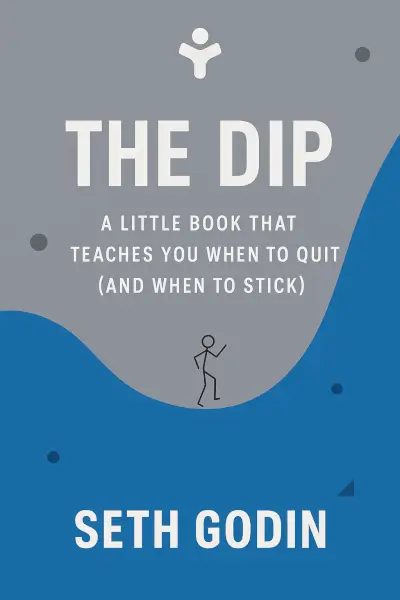
The Dip: A Little Book That Teaches You When to Quit (and When to Stick)
Ready to Take Action?
Get the Mentorist app and turn insights like these into daily habits.