Why Self-Education Can Outperform a $200,000 Business Degree
Josh Kaufman’s story didn’t begin with an inheritance or Ivy League diploma. Instead, it started in a rural Ohio library, surrounded by books, yet lacking any real-world business context. After landing a corporate job that demanded more business sense than his classes or textbooks had ever prepared him for, he made a choice that would eventually reach hundreds of thousands: skip the costly business degree, and build his own MBA, one deep read and experiment at a time.
His self-imposed curriculum called for days haunting the business stacks, reading far and wide—not just on management and marketing, but on psychology and systems science. When his new job at Procter & Gamble pushed him to manage projects, teams, and budgets, every concept had a use. Struggling to keep up, Kaufman began aggregating the best models and strategies, sharing them with friends. That personal project became his global movement—helping others sidestep massive debt and outdated theory in favor of action, learning, and connection.
For Josh, self-guided education was never about memorizing facts alone. It was about building a toolkit he could use at the next meeting or product launch, iterating fast when things didn’t work, and reaching out to an online world of peers and mentors. His method relied on mixing theory, hands-on action, and community—a blend now proven by thousands of others to trump the lure of expensive degrees.
Today, his example underscores a core behavior change principle: learning sticks best when it’s immediately relevant, actionable, and reinforced by social ties. In research, as in life, real ownership starts when you do the work yourself.
Decide—today—which business area leaves you stuck or uncertain, and track down one highly recommended resource to close that gap. As you learn, weave each lesson into real practice on your job, hobby, or project, aiming for small wins to build confidence. Then, make a point of reaching out—via email, forums, or meetups—to someone ahead of you or learning alongside you. This is your course, your network, your future, all without crippling debt. You don’t need permission to start.
What You'll Achieve
Save money and time, build lasting business skills, form authentic professional relationships, and develop the confidence to pursue big goals without credential anxiety.
Design Your Own Curriculum and Network
Map your current business knowledge gaps.
List out key areas—like marketing, sales, finance, systems, or leadership—where you feel weakest or most insecure.
Commit to highly-rated, self-directed resources.
Pick one practical book, podcast, or online course for each area and set small deadlines (e.g., 2 chapters per week, discuss with a friend).
Apply what you learn immediately on a small scale.
Choose a side project, hobby, or existing job as your practice lab to turn concepts into actions—for instance, try pitching your idea to a classmate, or track simple project income and costs.
Intentionally expand your network.
Reach out via email, social media, or local events to meet likeminded learners or mentors; share your progress and ask thoughtful questions.
Reflection Questions
- Where am I waiting for a 'credential' when I could be taking action?
- How will I structure learning so it’s active, not passive?
- Who can I reach out to as a peer or mentor in my self-education?
- What small project will I use as my lab for applying new business concepts?
Personalization Tips
- A working parent uses library books and YouTube lectures to master cash flow, then helps run a community fundraiser for practice.
- A creative teen joins two free online groups to discuss marketing ideas and get feedback, rather than paying for expensive seminars.
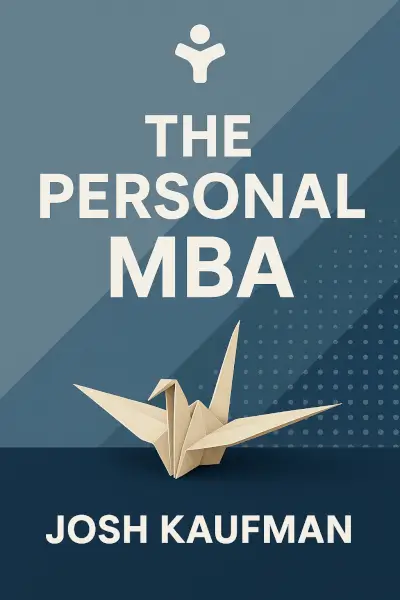
The Personal MBA: Master the Art of Business
Ready to Take Action?
Get the Mentorist app and turn insights like these into daily habits.