Trigger Action Reward Investment: The Four-Part Loop That Rewires Any Behavior
Most people try to change habits by sheer willpower, but neuroscience and psychology reveal a deeper pattern—a loop of trigger, action, reward, and investment. Imagine wanting to meditate daily: if you simply resolve to 'try harder,' odds are you’ll forget by Thursday. Now, pair meditation with a habitual cue—maybe right after you brush your teeth in the morning, you sit quietly for two minutes.
Next, spice up your reward. Use a variety—sometimes it’s a peaceful mood, sometimes a new guided track, or a message from a meditation group. This variability keeps it interesting. After you complete the action, add a tiny investment—record a checkmark in your notebook or share a thought with a friend. You've stored value that makes it feel a bit more personal and meaningful.
Through repetition, your brain connects the dots: when the trigger occurs, the action follows, the reward releases dopamine, and investment locks in your commitment. Behavioral design practitioners call this the Hook Model, and it explains not only addictive apps but also positive lifelong routines.
When you deliberately design for all four steps—trigger, action, variable reward, investment—you create robust new patterns that stand the test of daily life, setbacks, and boredom. From business to health to learning, this model is a proven foundation.
Select the single habit you really care about, and make the first step so easy—right after a stable trigger—that you can’t miss it. Shake up the reward every day: some days it’s social, others it’s progress or personal discovery. Mark each session with a micro-investment—a note, a photo, or a shared comment—then repeat the cycle. Reflect on which elements help it feel automatic and enjoyable. This week, see if you feel the loop locking in.
What You'll Achieve
You’ll be able to intentionally rewire daily routines, create stronger, longer-lasting habits, and understand the building blocks behind persistent behavior change.
Apply the Full Hook Model To a Single Routine
Select one core behavior to change or reinforce.
Choose something you want to make automatic—like meditating, flossing, reviewing goals, or networking.
Design or observe a strong trigger for starting.
Pair the routine with a reliable cue—after you brush your teeth, at a set time, or after an existing action.
Find or introduce a variable reward that delights or surprises.
Alternate the reward—sometimes feedback, sometimes personal achievement, sometimes social acknowledgment.
Have yourself or others make a small investment after each completion.
Write a note, log progress, or share—a small step that personalizes and stores value.
Repeat, reflecting after each full loop to improve effectiveness.
Notice what triggers work, which rewards feel exciting, and which investments make you return.
Reflection Questions
- Does my target habit have a clear and consistent trigger?
- What kind of rewards motivate me most, and how can I keep them interesting?
- Are there small ways to invest or personalize each repetition so the habit feels more 'mine'?
Personalization Tips
- Health: After each workout, post a summary in a group chat (trigger: calendar time; reward: friend reactions; investment: progress photo).
- Learning: Set a study alarm (trigger), reward with variety (new app, podcast, short quiz), and jot down a key insight before stopping.
- Social: Cue yourself to send appreciation texts at lunch (trigger), get varied replies (reward), and save favorite responses in a digital journal (investment).
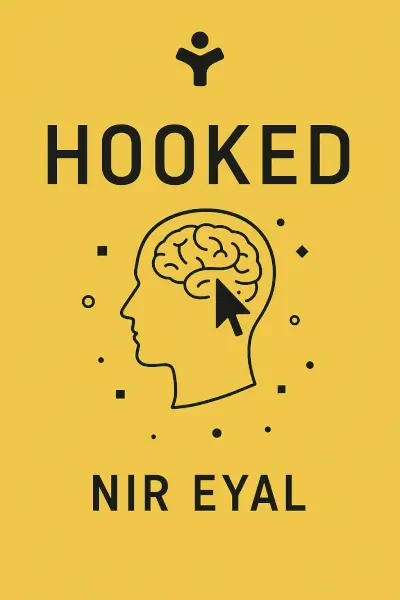
Hooked: How to Build Habit-Forming Products
Ready to Take Action?
Get the Mentorist app and turn insights like these into daily habits.